






















In roadbed compaction work, a common procurement mistake is to look at a roller's tonnage and price first, then figure out what it can do. The actual construction sequence is the opposite: how thick the lift is, what material, which layer to compact, and what density target to achieve—these conditions must be determined first before equipment configuration has a basis for judgment. This article follows this reverse-engineering path, using verified data for a 14-ton single-drum vibratory roller to explain which lift requirements each parameter corresponds to, and which conditions must be confirmed before requesting a quote.
First lock down three input conditions: lift, material, target
The starting point for roadbed compaction configuration judgment is not the machine, but the constraints of the work surface itself. Input conditions can be grouped into three categories.
- Lift conditions: single-layer paving thickness, number of layers, working width per layer, and whether it is the bottom layer of the roadbed or a layer close to the subgrade surface.
- Material conditions: whether the fill material is sand-gravel, crushed stone soil, cohesive soil or stabilized material; maximum particle size and moisture conditions directly affect the choice of vibration parameters.
- Target conditions: design-required compaction degree or settlement difference standards, passes required per layer, shift workload, and acceptance method.
Before these three items are confirmed, discussing "what size roller is suitable" lacks a comparison baseline. The thicker the soil layer, the coarser the material, and the closer the target is to heavy compaction standards, the higher the requirements for exciting force and drum line load; conversely, for thin layers, fine-grained materials or compaction close to the surface layer, the need for large-amplitude strong vibration decreases.
Reverse-engineering from targets: which machine capabilities to examine
Translating the above conditions into equipment language mainly comes down to four dimensions: exciting force determines whether vibration energy can reach deep into the lift; the combination of amplitude and frequency determines whether the vibration state leans toward "deep layer" or "surface layer"; drum width relates to work surface width and turning radius; overall weight and gradeability relate to site adaptability and transfer efficiency.

It should be noted that these items are not simply a "bigger is better" relationship. Large amplitude is beneficial for deep compaction in thick coarse-grained layers, but in thin layers or near the surface it may cause surface loosening or excessive vibration; higher frequency means more vibrations per unit time, suitable for rapid work in medium-thin layers, but must also be verified against material and passes. A more reasonable approach in selection is: first use lift and material to define the parameter range, then check efficiency using target passes and shift workload.
Parameter correspondence of a 14-ton single-drum machine
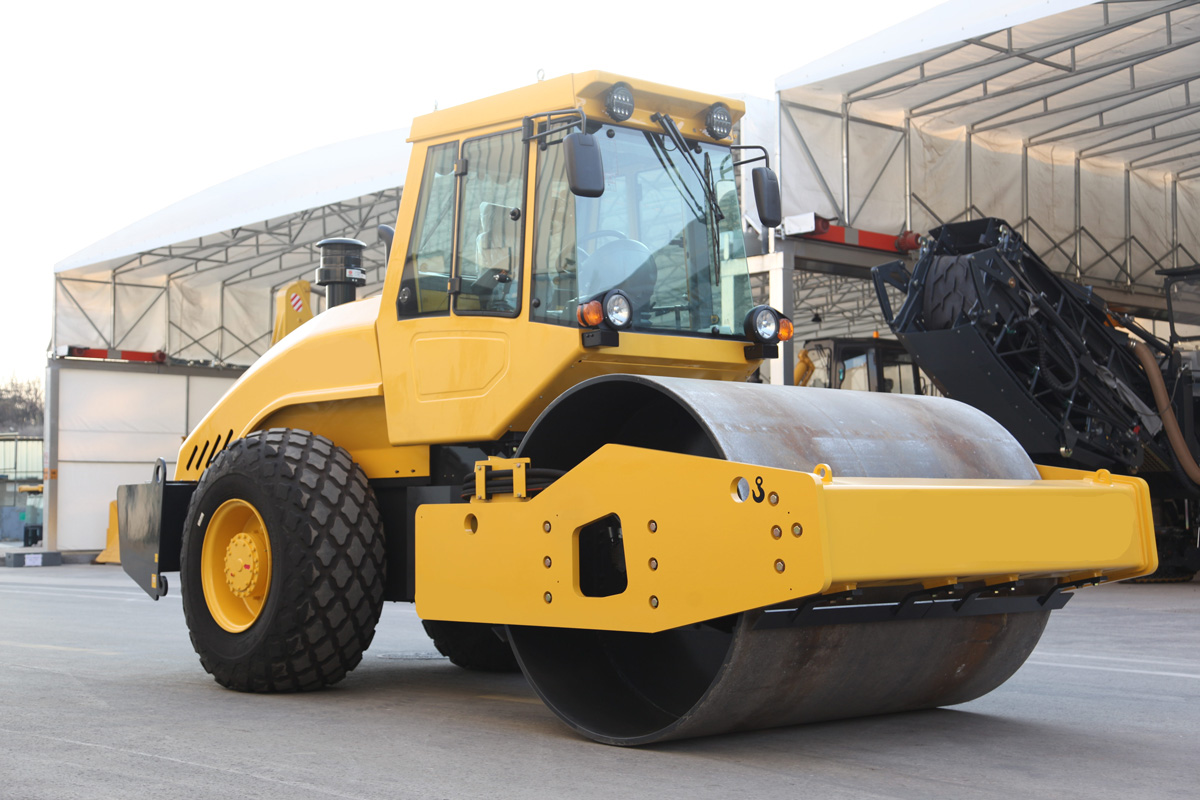
Taking the S146D single-drum vibratory roller from this site's product data as an example, its operating weight is 14000 kg, drum width 2133 mm, diameter 1534 mm, exciting force 315/190 kN, amplitude 1.85/0.83 mm, vibration frequency 30/34 Hz, engine power 105 kW (142 HP), emissions compliant with Tier 2/China Stage II standards, speed range 0–9 km/h, gradeability 45%, turning radius 6500 mm. These values can serve as reference points in the reverse-engineering path.
| Lift and target conditions | Corresponding parameter dimension | Reference values in data |
|---|---|---|
| Thicker fill layer, coarse material, deep compaction required | Large amplitude, high exciting force setting | Amplitude 1.85 mm, exciting force 315 kN |
| Medium-thin layer, close to subgrade top or sensitive to surface smoothness | Small amplitude, higher frequency setting | Amplitude 0.83 mm, frequency 34 Hz |
| Work surface width and number of overlaps | Drum width | 2133 mm |
| Site transfer and slope passage | Gradeability, turning radius | 45%, 6500 mm |
This machine offers dual amplitude and dual frequency combinations, meaning the same machine can cover two vibration settings rather than a fixed vibration state. For layered fill roadbed projects where material varies by layer, this dual-setting configuration provides room for parameter adjustment. However, the data only gives setting values and does not specify recommended passes or compaction results for each material; this part must be determined by on-site test sections.

Constraints corresponding to power and emission standards
The machine is equipped with a 105 kW engine, with emissions compliant with Tier 2/China Stage II standards. This emission level means it is more suitable for regions or projects with less stringent current emission regulations; if the construction location has stricter emission access requirements for non-road mobile machinery, local policies must be separately verified before purchase, and entry cannot be judged solely on this parameter. The data does not provide fuel consumption figures, so fuel costs cannot be estimated from it.
What this configuration suits and what it does not
From the parameter combination, a 14-ton single-drum vibratory roller is a medium specification in roadbed compaction, suitable for earthwork roadbeds with layered fill, municipal road bases and general foundation works. The 2133 mm drum width corresponds to medium-width work surfaces; if the work surface is very narrow or requires frequent turning, the 6500 mm turning radius needs to be considered in site layout; if the work surface is very wide, the impact of overlap passes on shift efficiency should be assessed.
Conversely, the following situations cannot be concluded based solely on this equipment's data: first, when the material is hard rock fill or requires special compaction processes, whether single-drum vibration is applicable must be separately confirmed; second, when lift thickness significantly exceeds conventional layered ranges, the matching relationship between exciting force and layer thickness must be recalculated; third, surface layer work requiring dual-drum or pneumatic-tire equipment is outside the scope of this article. The data does not provide an applicable material list, compaction result data or construction cases; these are all items to be confirmed.
Checklist to confirm before purchase
If this equipment is shortlisted, the following conditions should be provided to the supplier during inquiry so they can verify whether the configuration matches:
- Fill material type, maximum particle size and moisture conditions, and layered paving thickness.
- Compaction degree target per layer, acceptance method, and whether a test section is needed to determine passes.
- Work surface width, length and shift workload, and on-site slope conditions.
- Emission level requirements for non-road machinery in the construction area.
- Transfer method and transport conditions; overall dimensions 5900×2290×3155 mm should be checked against the transport plan.
- Whether additional or optional work equipment is needed, and local service and parts conditions.
Compaction passes, travel speed and vibration settings must ultimately be determined in test sections and cannot be copied from other projects. Equipment data provides parameter boundaries; site conditions determine where within those boundaries the parameters fall. Clarifying lift targets and material conditions first, then checking exciting force, amplitude, frequency and drum width item by item, is more reliable than choosing the machine first and finding work for it afterward.