






















In municipal roadbed construction, roller operation is rarely a standalone step: the paver or bulldozer spreads the fill, and the roller must complete compaction within the specified time before the next layer or process can begin. Thicker layers require greater compaction energy; more passes mean a single machine covers less area per shift. When equipment parameters and layer organization are out of sync, the common outcomes are repeated re-compaction due to inadequate density, or excess machine capacity occupying too many machine-shifts. This article addresses the question of how paving rhythm and equipment capability connect, using verified data for a 16.4-ton single-drum vibratory roller to explain which fields to examine in selection decisions and which conditions require on-site verification.
Why Paving Rhythm Affects Roller Selection
The fill type, moisture content, and layer thickness of municipal roadbed are determined by design documents and the construction plan; the roller is only the execution link. If a single layer is thick, the fill is dry, or particle size is coarse, greater excitation force and more passes are usually needed; if layers are thin, the work area is long and narrow, or frequent repositioning occurs, equipment mobility and coverage efficiency gain weight. The key is not to find the "largest" machine, but to match the machine's operating weight and amplitude-frequency combination to the layer target.
Another constraint comes from process sequencing: roadbed compaction often overlaps with earth excavation and truck loading, and the roller must complete compaction within a limited window and clear the work face. Shift arrangements, work face length, and turning space all affect the actual area that can be compacted. These conditions have no direct answers in equipment data and must be confirmed item by item before mobilization.
Deriving Equipment Questions from Layer Targets
Translating layer requirements into equipment conditions can proceed in the following order:

- Single-layer thickness and fill type: determines the required static linear pressure and excitation force, and whether vibratory compaction or static finishing is used.
- Compaction passes and work area: determines the length to be covered per shift, which in turn affects the match between working width and travel speed.
- Work face width and turning conditions: determines whether turning radius and machine dimensions are suitable; municipal roadbed often involves segmented construction and long, narrow work faces.
- Relocation method and transport limits: overall dimensions and weight affect flatbed trailer selection and access routes.
These questions have no universal answers, but they determine which parameters deserve priority in selection rather than comparing tonnage alone.
Which Requirements the Data for a 16.4-Ton Single-Drum Machine Addresses
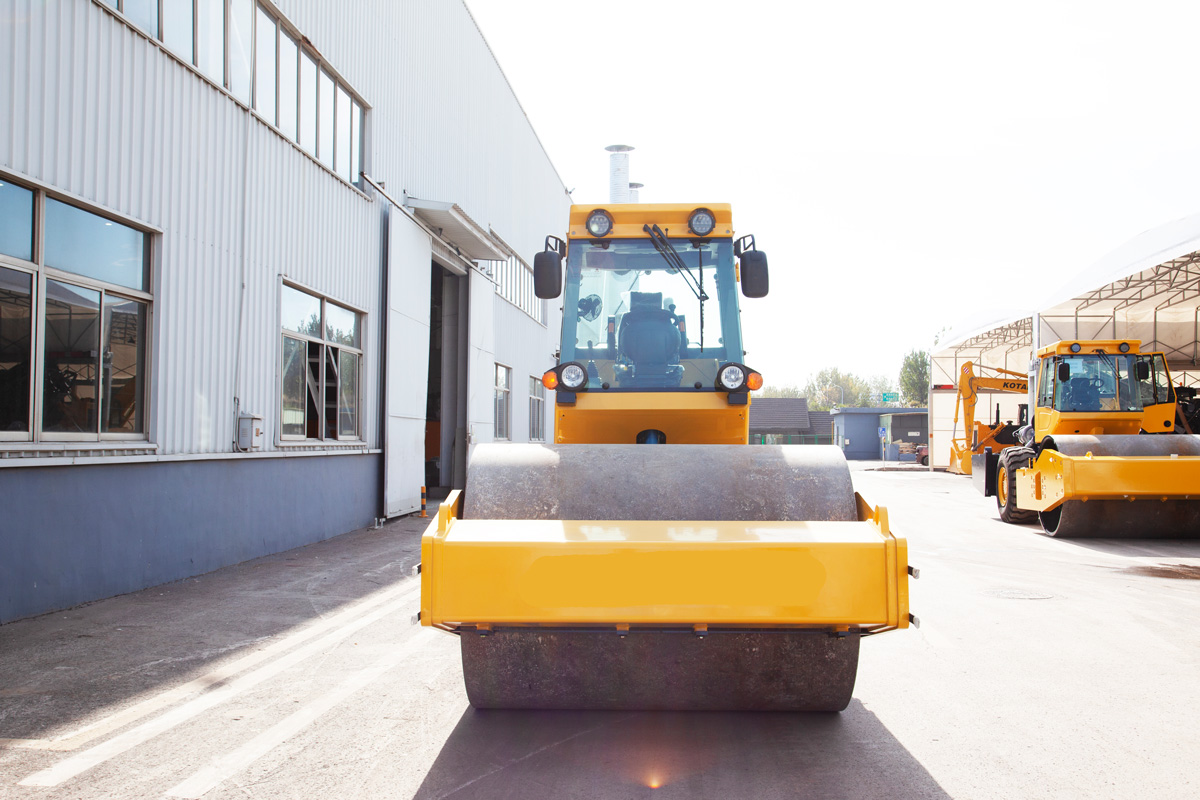
Taking the S166D single-drum vibratory roller on this site as an example, its verified parameters can serve as a reference for the above questions. Note that these parameters only indicate the machine's operating capability range; whether it actually meets a given layer requirement must still be verified by a field test section or the construction plan.
| Data Field | Verified Parameter | Corresponding Layer Question |
|---|---|---|
| Operating weight | 16.4 tons | Affects the basis of unit linear pressure under static compaction, related to layer thickness and fill type |
| Static linear pressure | 464 N/cm | Reflects the static force intensity of the drum on the ground, to be compared with layer targets |
| Amplitude | 1.9 / 0.9 mm (dual amplitude) | Thick layers or coarse fill tend toward high amplitude; thin layers or finishing tend toward low amplitude |
| Vibration frequency | 28 / 33 Hz (dual frequency) | Affects vibration cycles per unit time; combined with travel speed, determines compaction quality |
| Centrifugal force | 330 / 225 kN | Reflects vibratory compaction capability, to be matched with fill and layer thickness |
| Drum width | 2110 mm | Determines coverage width per pass, affecting pass organization within the work face |
| Travel speed | 0–9 km/h | Together with vibration frequency, affects vibration cycles per meter of compaction |
| Gradeability | 45% | Affects judgment for longitudinal slope sections and access routes |
| Turning radius | 6500 mm | Affects turning organization in long, narrow work faces and segmented construction |
| Overall dimensions | 6400 × 2300 × 3200 mm | Affects transport vehicle selection and on-site passage requirements |
| Engine power | 129 kW (175 HP) | Powers the vibration system and travel; emission standard is Tier 2/China II |
The combination of dual amplitude and dual frequency means the same machine can switch operating modes according to layer stage: high amplitude and lower frequency for initial compaction of thick layers, switching to lower amplitude for surface layers or finishing. This adjustability corresponds to the reality that different layer positions in municipal roadbed layered construction have inconsistent requirements. However, the data does not provide recommended values for which parameter set to use on which layer; this must be determined based on fill test sections and the construction plan.
Work Face Conditions and Transport Limits Must Be Settled First
Municipal roadbed work faces are often affected by surrounding traffic, utility relocation, and segmented fencing. The S166D has a drum width of 2110 mm and an overall width of 2300 mm; within segmented work faces, it is necessary to confirm whether there is sufficient compaction width and passing space. A turning radius of 6500 mm means that turning in long, narrow sections requires reserved areas; otherwise, effective compaction time is reduced.

For relocation and transport, the overall dimensions of 6400 × 2300 × 3200 mm and operating weight of 16.4 tons require verification of flatbed trailer load capacity, access road width and height limits, and loading/unloading site conditions. Municipal projects are often located in urban areas, and transport time restrictions and route approvals are also items to confirm before mobilization; these have no corresponding fields in equipment data and must be settled jointly by the project party and the transport provider.
Power and Emission Conditions Must Be Checked Against Project Requirements
This machine is equipped with a 129 kW engine, with emission standard Tier 2/China II. If a municipal project is located in an area with higher emission control requirements, or if the tender documents explicitly specify the emission stage for non-road mobile machinery, it is necessary to check before purchase whether local current requirements match the machine's emission stage. The data does not cover after-treatment configuration or higher emission stage options; this item is pending confirmation and cannot be inferred from existing fields.
Engine brand information is not elaborated here; selection judgment should be based on power, emission stage, and on-site fuel supply conditions. If the project has requirements for refueling methods, fuel storage facilities, or remote management, these should also be raised separately in procurement communication.
Which Conditions Require Additional Verification
Single-drum vibratory rollers are suitable for roadbed and foundation compaction, but whether a specific project is suitable also depends on the following conditions not covered in the data:
- Whether the maximum particle size and moisture content of the fill are within the applicable range for vibratory compaction;
- Whether layer thickness and compaction passes have been verified by a test section;
- Whether the work face contains soft ground or underground utilities that require limiting vibration impact;
- Specific local requirements for non-road machinery emissions and noise;
- The attachment and configuration list at delivery, such as whether padfoot drum or other optional items are included.
These conditions cannot be judged from overall machine parameters alone and should be confirmed item by item during inquiry and construction planning.
Checklist for Pre-Purchase Comparison
- Layer design: single-layer thickness, fill type, density requirements, and testing methods;
- Work organization: work face length and width, segmentation method, turning space, shift arrangements;
- Transport conditions: flatbed trailer capacity, access route width and height limits, loading/unloading site;
- Power and emissions: project emission requirements, fuel supply method, local non-road machinery management requirements;
- Configuration confirmation: drum type, vibration parameter combinations, whether other work equipment is required;
- Maintenance conditions: whether on-site space exists for daily inspection and servicing, and whether the inspection items required by the manual can be performed.
The core of equipment matching for municipal roadbed compaction is to place layer targets, work face conditions, and verified equipment parameters in the same table for comparison. The 16.4-ton single-drum vibratory roller offers adjustable space in dual amplitude, dual frequency, and drum width, but whether it suits a specific project still depends on test section results and on-site conditions. When requesting a quotation, it is recommended to provide fill type and layer thickness, work area and schedule, site and transport limits, emission requirements, and key configuration needs so that the supplier can provide corresponding configuration explanations.