






















On deep foundation sites, the problems tend to concentrate in one place: can the pit bottom be reached, and where does the excavated spoil go. Dig depth and dump height correspond to these two steps respectively, but when specifying or allocating equipment it is easy to look at only one of them and discover after mobilisation that the truck loading position is out of reach, or that spoil must be double-handled after digging to the bottom. Using the published specifications of a 38-tonne crawler excavator as an example, this article explains how the working range fields should be used in combination, and which conditions must be verified against the site.
First, distinguish the different concepts within working range
The working range in machine documentation usually includes maximum dig depth, maximum vertical dig depth, maximum dig radius, maximum dig height and maximum dump height. These figures are not different ways of saying the same thing; each corresponds to a different stage of the work:
- Maximum dig depth: the theoretical maximum downward digging capability, used to judge whether the pit depth can be covered.
- Maximum vertical dig depth: the depth reachable when digging against a vertical face, which is closer to the practical limit for vertical excavation in deep foundations.
- Maximum dig radius: determines the plan area the machine can cover without repositioning.
- Maximum dump height: determines how high the bucket can lift spoil, directly affecting whether trucks can be loaded directly.
In deep foundation excavation, dig depth and dump height often need to be satisfied at the same time: the pit bottom must be reachable, and the spoil must be dumpable into dump trucks or temporary stockpiles. If dump height is insufficient, even if the bottom can be reached, the spoil may need secondary transfer, adding an extra step to the work sequence.
Correlating the figures for a 38-tonne crawler excavator
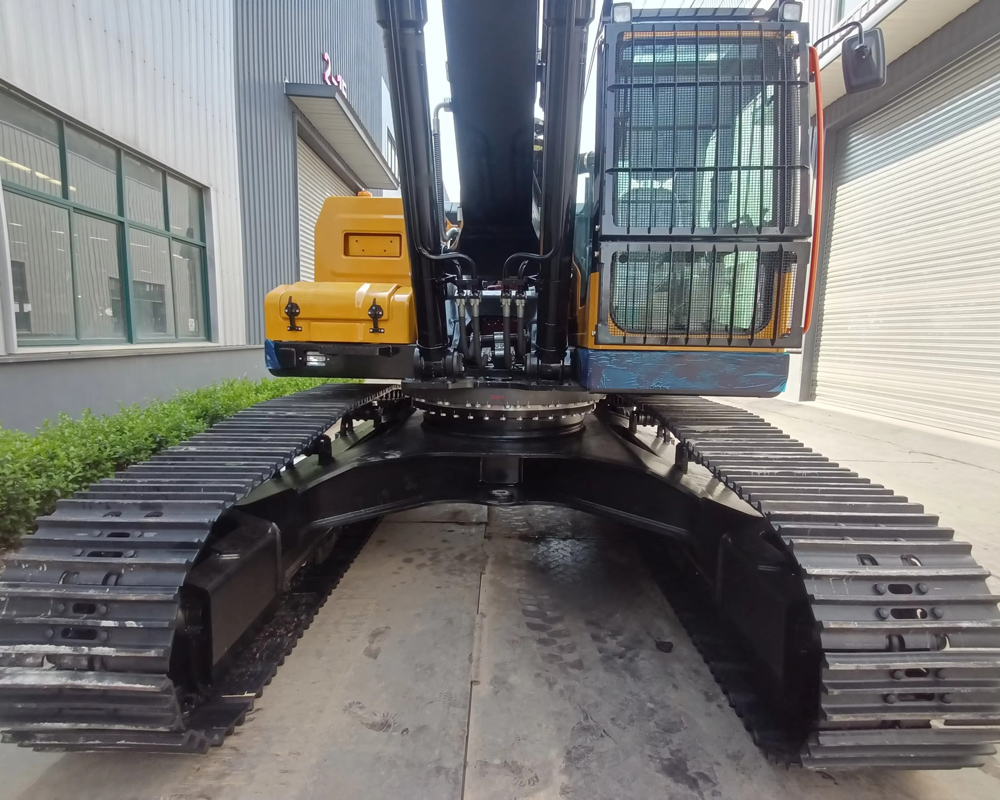
The SH380h referenced in this article is a 38-tonne crawler excavator equipped with a 1.7 m³ bucket. The documented working range is as follows:

| Working range item | Value |
|---|---|
| Maximum dig depth | 7372 mm |
| Maximum vertical dig depth | 6731 mm |
| Maximum dig radius | 11178 mm |
| Maximum dig height | 10511 mm |
| Maximum dump height | 7572 mm |
| Minimum swing radius | 3865 mm |
From this data, there is a difference of about 640 mm between maximum dig depth and maximum vertical dig depth. The practical meaning of this difference is that when digging against a vertical face, the reachable depth is somewhat shallower than the theoretical maximum. In deep foundation projects using vertical shoring, where the pit face is close to vertical, the more realistic reference for judging whether the design elevation can be reached in one pass is the maximum vertical dig depth, not the maximum dig depth.
The maximum dump height of 7572 mm corresponds to the height of the dump point when the bucket is raised to its highest position. The top of a standard dump truck body is usually within a few metres, so on the numbers alone this dump height leaves room to discharge directly into a dump truck. But whether loading actually works smoothly also depends on the interplay between machine position, truck position and swing angle; a single height figure alone cannot confirm that a loading plan is feasible.
Depth and dump height must be viewed within the same work cycle
A typical deep foundation excavation cycle is: dig down, fill the bucket, lift, swing, dump, and swing back into the pit. Dig depth determines how deep the bucket can reach to take material, and dump height determines how high the spoil can be delivered after lifting. Both must be satisfied for the cycle to be complete.
If the pit depth approaches the maximum vertical dig depth, the stick and boom will be in a relatively strained posture when taking material at the pit bottom, and loading efficiency may drop. This is a general rule of deep digging conditions, not a problem specific to any one machine. In such cases, the usual approach is to excavate the pit in layers, keeping each layer within a depth range the machine can handle comfortably, rather than digging to the limit in one pass.

The same applies to dump height. If the dump truck is parked at a higher position at the pit edge, or the temporary spoil point is at a higher elevation, dump height will approach its limit sooner. In that case, adjusting the truck position or lowering the spoil point elevation is often more direct than changing equipment.
Radius and swing space are often overlooked
The maximum dig radius of 11178 mm determines the plan area the machine can cover without repositioning. In a deep pit, if the pit opening is limited and machine position is constrained, the actual excavatable area will be smaller than the theoretical radius. The documented minimum swing radius of 3865 mm corresponds to the space occupied when the machine swings. On urban deep foundations or sites with dense retaining structures, swing space often becomes the limiting condition sooner than dig depth.
The documentation also gives a maximum gradeability of 35°. This figure is not directly related to working range, but where the machine enters and exits via a pit ramp or where site levels vary significantly, it affects whether the machine can reach position under its own power and must be judged separately against site road conditions.
Items to confirm before selecting this type of equipment
The published specifications for the SH380h provide fields such as working range, digging forces, hydraulic system pressure and overall dimensions, which can serve as a starting point for analysing a deep foundation excavation plan. Whether it suits a specific project, however, also depends on the following conditions:
- Pit depth and support type: vertical faces or sloped excavation directly determine whether maximum dig depth or maximum vertical dig depth should be referenced.
- Spoil removal method: the relative relationship between dump truck body height, parking position and machine position determines whether dump height is sufficient.
- Site plan dimensions: pit opening width, retaining structures and distance to adjacent buildings determine whether swing radius is restricted.
- Material conditions: the documentation gives a bucket digging force of 244 kN and a stick digging force of 200 kN; whether the bucket can actually penetrate effectively also depends on soil class, density and whether cobbles are present.
- Transport conditions: overall dimensions are 11285×3190×3664 mm; access road width, bridge load capacity and turning radius must be verified against the transport plan.
If any of these conditions differs from the assumptions in the documentation, the practical usability of the working range may change. The documentation does not provide productivity, fuel consumption or construction outcome data for specific soil conditions, and this article makes no inferences on these points.
Site information to provide when requesting a quotation
When allocating an excavator for deep foundation excavation, it is advisable to provide at the quotation stage: pit depth and support type, dump truck body height and parking arrangement for spoil removal, site plan dimensions and swing constraints, soil class and whether stone is present, working hours per shift, and specific requirements for the working attachment and bucket. This information determines which working range fields are the real constraints, and helps judge whether layered excavation or adjusted truck loading arrangements are needed.
For product information on the 38-tonne crawler excavator discussed in this article, see the 38-tonne crawler excavator page.