






















Heavy-load mine pushing is usually organized as continuous shift work: long push distances, heavy material, and equipment that rarely sits idle for long once started. If a machine stops mid-shift due to power, transmission or undercarriage problems, the impact is often not just that shift's pushing volume but also the loading and hauling links connected to it. When purchasing a large dozer, it is therefore worth using "where downtime losses come from" as a diagnostic thread rather than looking only at rated power.
Below, using public information on a 600 hp large crawler dozer as an example, we break down several design features relevant to continuous heavy-load pushing and identify which conditions the buyer must confirm independently before requesting a quote.
Downtime risk usually does not stem from a single link
Equipment stoppage in heavy-load pushing can come from multiple levels: overheating or leakage in the power system, damage to transmission components after impact loads, premature undercarriage wear under gravel and hard-ground conditions, failure of hydraulic system seals, and minor problems escalating into major failures because daily inspection is inconvenient. These factors are interrelated. Purchasing requires checking them item by item in the order of "power—transmission—undercarriage—hydraulics—maintenance accessibility" rather than comparing a single power figure.
Power and transmission: continuous output and impact absorption
This model is powered by a water-cooled, inline, four-stroke, direct-injection, turbocharged and intercooled diesel engine rated at 340 kW/600 hp, with a rated speed of 2,000 rpm and a displacement of 18.9 L. The materials mention that the cylinder block and cylinder head use an integrated design intended to reduce common faults such as water seepage and oil leakage. For continuous heavy-load pushing, whether the power system can deliver stable output over long periods matters more than short-term peaks; these structural descriptions can serve as verification directions but cannot replace an assessment of the specific mine's altitude, temperature and dust conditions.

On the transmission side, the machine uses a hydraulic power-shift transmission with a planetary final drive structure. The materials state that it can adjust power output according to changes in external load and incorporates a built-in hydraulic buffer structure to absorb impact loads in power transmission. In heavy-load pushing, impact loads objectively exist when the blade cuts into the material pile and the tracks encounter hard spots; whether they can be absorbed by the transmission chain will be reflected in long-term reliability. However, such descriptions are product-literature statements, and actual service life still depends on operating method, material gradation and maintenance execution. Before purchase, buyers should request maintenance requirements and a wear-parts list for mine conditions from the supplier.
Undercarriage and structural components: matching gravel, hard ground and slope conditions
The machine adopts a K-type suspended floating drive structure and an integral articulated undercarriage. The materials state that it can cushion impact loads during travel and operation and is paired with a multi-stage damping assembly. The operating weight is 54,000 kg, ground pressure is 0.123 MPa, and gradeability is 30°. These figures can help judge the machine's basic suitability for mine roads and slopes. Note, however, that ground pressure is a static parameter; actual sinkage also depends on the moisture content, compaction and surface material of the mine road. Gradeability also cannot be directly equated with slope-crossing capability when pushing at full load.
The main frame uses a fully enclosed box structure. The materials state that it uses high-strength wear-resistant steel and heavy cast-steel fittings to improve impact, bending and torsion resistance. The track chain is fully sealed and lubricated, with an integrated main link design. For continuous mine operation, the undercarriage and travel mechanism are high-incidence downtime areas, so the maintenance method, replacement intervals and spare-parts supply for sealed lubricated tracks should be confirmed during the procurement stage.

Hydraulic and electrical monitoring: detecting faults earlier
The materials show that the machine's working hydraulic cylinders have been optimized, with core seals and high-pressure hydraulic hoses using imported high-standard components, and an externally mounted distribution valve group that facilitates later inspection, disassembly and maintenance. On the electrical side, a combination instrument panel can monitor key data such as hydraulic oil temperature, oil level and coolant temperature and issue over-limit alarms. In continuous heavy-load operation, abnormal temperature and fluid levels are often precursors to downtime; whether this information can be seen in time affects the pace of fault handling.
A distinction is needed here: the intelligent monitoring in the materials is at the level of instrument display and alarms and is not equivalent to remote diagnostics or predictive maintenance. If the buyer wishes to connect to a mine equipment management system, interfaces, data items and follow-up service conditions should be confirmed separately.
Maintenance accessibility: reducing time spent on inspections
The machine has maintenance reminder decals in prominent positions, a maintenance-free battery as standard, and a wide-opening engine hood for daily inspection and parts replacement. The materials also mention that the number of core supporting components is reduced compared with models of the same class and that daily maintenance workload is lower, but these are supplier statements lacking third-party verification. During procurement, buyers can require the supplier to clearly list daily inspection items, replacement conditions for filters and oils, and which operations must be performed by authorized service personnel, so as to avoid interpreting "easy maintenance" as permission to skip necessary inspections.
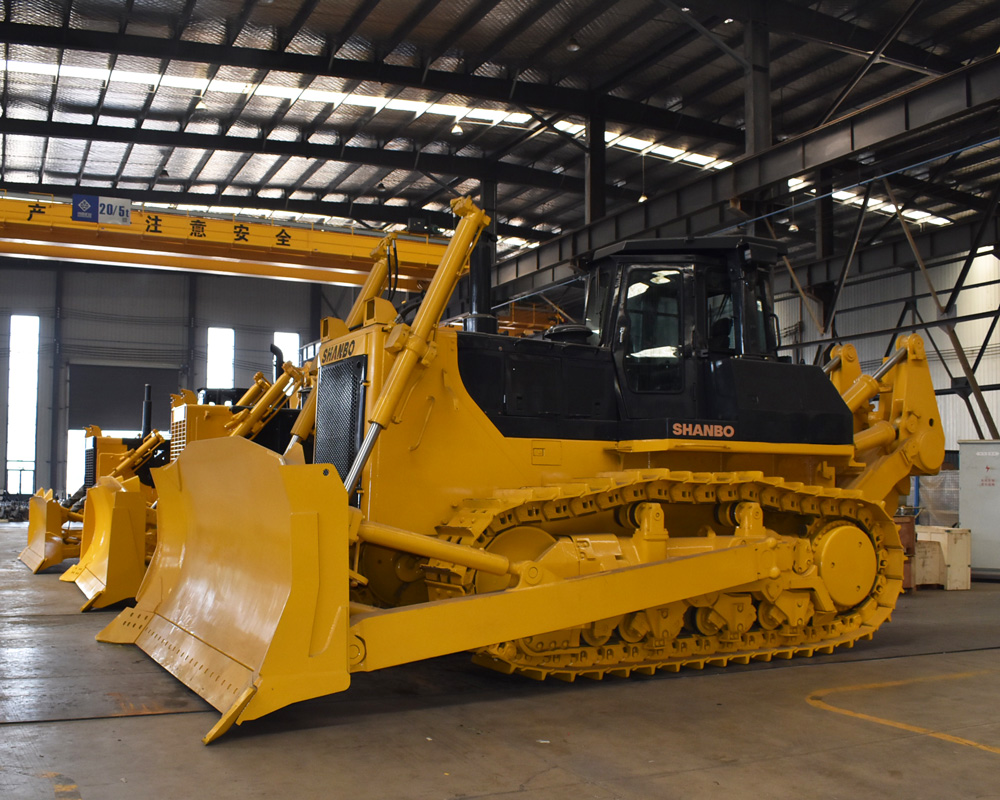
Conditions to confirm before purchase
The above materials can show what arrangements this model makes in power, transmission, undercarriage and maintenance design for heavy-load conditions, but they are not sufficient to directly infer its downtime rate or operating cost at a specific mine. The following conditions need to be settled item by item before inquiry and site entry:
- Material conditions: rock strength, lump size, whether pre-ripping is required, as well as push distance and shift arrangements.
- Site conditions: mine road load-bearing and moisture conditions, slope gradient and length, and layout of turning and dumping areas.
- Supporting conditions: coordination pace with loading and hauling equipment, fuel supply and maintenance site arrangements.
- Configuration verification: blade type (the materials list a standard large-capacity semi-U bulldozer blade, capacity 16 m³, width 4,314 mm), ripper configuration (the materials list an adjustable-angle single-shank heavy-duty ripper), and protective structures (ROPS/FOPS; the materials also mention an optional upgraded integrated protective frame).
- Service conditions: spare-parts supply scope, service response method, and operator and maintenance training arrangements.
If the project is mainly long-distance continuous pushing, particular attention should also be paid to verifying the machine's actual pushing efficiency under the above material and slope conditions. If the project is mainly rock stripping and hard-ground ripping, the supply of wear parts for the ripper and blade needs to be confirmed. The materials do not provide measured data on fuel consumption, reliability or efficiency under specific working conditions; these should be separately confirmed in the contract through tests or operating records provided by the supplier, and downtime losses should not be judged solely from a specification sheet.
When requesting a quote, it is recommended to provide: material type and density, push distance, shift and annual workload, mine road and slope conditions, transport and site-entry method, power-form requirements, and specific needs for blade, ripper and protective configuration, so that the supplier can propose a configuration plan matching the working conditions.