






















After expanding the mining face or deepening a pit, mines or large infrastructure projects often consider using ultra-heavy mining excavators to handle larger working radii and loading tasks. But once the working range is expanded, where the machine itself can dig, and whether the site can accommodate it, whether transport can deliver it, and whether the ground can bear it, are two different sets of questions. Using the overall data of a 120-tonne-class ultra-heavy mining excavator as a reference, this article breaks down the site and transport conditions that need to be checked in parallel after the working range is expanded.
What constraints the site must face again after the working range is expanded
Expanding the working range first changes the machine's footprint and swing space on site. This type of model has a longer working equipment and a larger tail swing radius, so the coordination between the parking position and transport vehicles is no longer the original layout. Second, the increase in overall weight and ground pressure imposes new requirements on the load-bearing capacity and drainage of platforms, roads and ramps. Finally, machine entry depends on heavy transport, so transport dimensions, disassembly conditions and route clearances must all be confirmed in advance.
Therefore, when evaluating this type of equipment, one should not only look at "how far and how deep it can dig," but also put site layout, transport organization and ground conditions on the same checklist.

What an expanded working range means based on the overall data
Site space corresponding to working range values
This model has a maximum digging radius of 13,875 mm, maximum digging height of 12,480 mm, maximum digging depth of 8,165 mm and maximum dumping height of 8,065 mm. These values indicate a large single-operation coverage, which can reduce frequent machine repositioning in deep pits. But the larger the coverage, the higher the requirements for the edge of the parking platform, the safety distance at the top of slopes and the layout of dumping points, which must be calculated specifically in relation to on-site slopes and transport road locations.
Overall dimensions and swing conditions
The overall length is 14,845 mm, overall width 5,385 mm, overall height (to the top of the cab) 4,475 mm, ground clearance 1,070 mm, tail swing radius 5,100 mm, track gauge 3,900 mm, overall track width 4,600 mm and standard track shoe width 700 mm. These dimensions determine the minimum layout area for the machine on the mining face, as well as the occupation of rear personnel passages and pipeline layouts during tail swing. When the working face is narrow, it is necessary to confirm whether the swing range conflicts with transport lanes, cable trays or safety passages.
Ground pressure and ramp travel
This model has an operating weight of 120,000 kg, ground pressure of 147 kPa, gradeability of 70% (35°), travel speed of 2.4/3.5 km/h and traction force of 745 kN. The ground pressure value can serve as a starting point for evaluating platform load-bearing capacity and roadbed treatment, but actual bearing capacity also depends on soil or rock surface conditions; softened ground after rain, backfill areas and native rock surfaces differ greatly and must be confirmed on site separately. Gradeability is an overall machine indicator given in the data; actual travel also depends on slope surface adhesion, road maintenance and load status, and cannot be directly equated with passability on any ramp.

Transport must be checked separately
A model with an expanded working range usually also means transport dimensions and weight enter another order of magnitude. This model has an overall width of 5,385 mm, overall height of 4,475 mm and overall length of 14,845 mm; ordinary road transport requires organization as an over-limit load, involving route surveys, bridge and culvert load-bearing capacity, turning radii and loading/unloading sites. Whether the working equipment must be disassembled for relocation within the mining area, and whether tracks need to be transported in sections, is not covered by the data; the transport state and disassembly requirements must be confirmed with the supplier. On-site road width, curve widening and temporary storage yard area should be planned in advance accordingly.
Energy and support conditions
This model is equipped with a Weichai 8M33 engine, displacement 26.1 L, rated power 680 kW/1800 rpm, representing a high-power fuel power solution. The site must verify fuel supply capacity, fuel storage and transport arrangements, and refueling frequency under high-intensity cyclic operation. The data does not provide fuel tank capacity or specific fuel consumption figures, so single-shift fuel use or operating costs cannot be calculated from it and must be verified separately.
Loading support and operation organization
This model has a bucket capacity of 7.5–10 m³, bucket digging force of 610 kN, stick digging force of 532 kN and swing speed of 5.5 rpm. These data indicate a large single-bucket load, suitable for matching with large transport trucks. But loading efficiency depends on truck body capacity and number of units, dumping point distance, working face flatness and dispatch organization; the data does not provide cycle time or productivity figures, so actual loading pace cannot be judged from it and must be calculated in relation to the specific transport configuration.
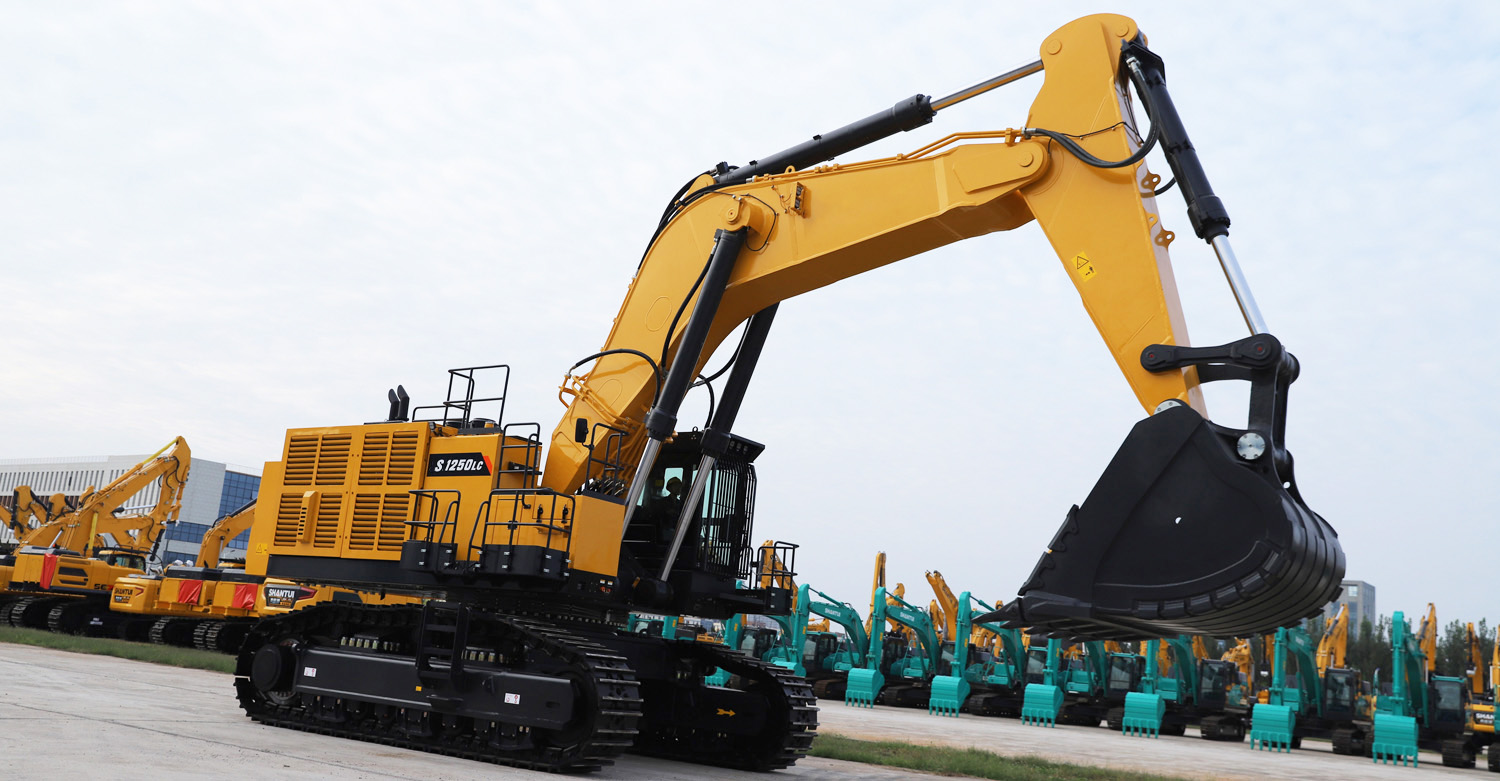
Take a hypothetical scenario as an example: if the mining face has only one one-way transport passage, and the 5,100 mm tail swing radius overlaps with the transport lane, then the parking position must be adjusted or vehicle entry and exit times staggered. This scenario is only a condition analysis and does not represent any actual project.
Conditions to confirm item by item before purchase
- Working face dimensions and layout: confirm the parking platform area, tail swing range, and the relative positions of dumping points and transport lanes.
- Ground bearing and drainage: evaluate platform and road treatment plans based on the 147 kPa ground pressure, and verify bearing changes under rainy season or softened conditions.
- Ramp travel: verify actual slope length, slope surface adhesion and road maintenance; the 70% (35°) gradeability must be judged in relation to actual load and adhesion conditions.
- Transport organization: implement over-limit transport routes, bridge and culvert load-bearing capacity, turning radii and loading/unloading sites according to overall dimensions and weight.
- Fuel supply: verify on-site fuel supply capacity and storage arrangements; fuel tank capacity and fuel consumption are not given in the data and must be confirmed with the supplier.
- Working equipment and transport state: confirm bucket configuration, whether the working equipment is disassembled during transport, and disassembly requirements.
- Supporting transport vehicles: verify whether truck body capacity and number of units can match the loading pace of the 7.5–10 m³ bucket.
For further quotation, it is recommended to provide material type and density, average daily workload, working face and ramp conditions, transport routes and clearances, shift arrangements, fuel supply conditions and key configuration requirements, so as to verify how well the overall machine solution matches site conditions. This model is suitable for extreme open-pit mining, large-scale bulk excavation, large infrastructure projects and deep pit operations; this is the application direction given in the data. Whether it applies to a specific project must still be confirmed item by item against the above conditions. The product page for this model can serve as a starting point for further verification: ultra-heavy mining excavator.