






















The most common problem before a hydrostatic bulldozer enters a site is not whether it has enough horsepower, but whether the machine version matches the site conditions. For the same medium-sized hydrostatic bulldozer, the standard, super-wetland, coal and sanitation versions differ in operating weight, ground pressure, track shoe width and blade type. If a mismatch is discovered only after entry, there is very little room for adjustment. Using a 178HP fully hydraulic hydrostatic bulldozer as an example, this article organizes the pre-entry check items in the order of work start-up for the reference of procurement and site management personnel.
First clarify work objectives and site constraints
The tasks of a hydrostatic bulldozer usually include pushing, excavating, backfilling and rough grading, but for a specific site the constraints often concentrate in the following areas:
- Ground bearing capacity and moisture state: dry hard earthwork, soft wet ground and muddy sites have completely different requirements for track ground pressure.
- Material type: general earth and rock, bulk coal, domestic waste and other materials have different requirements for blade type and undercarriage protection.
- Transport and access roads: the overall dimensions and transport method determine whether the equipment can arrive smoothly.
- Work shifts and continuous operating duration: continuous operating capability affects fuel tank, refueling and personnel arrangements.
- Emission and environmental requirements: the emission stage of non-road machinery must correspond to local management requirements.
If these conditions are only confirmed verbally based on experience before entry, items are easily missed. The checklists are listed by stage below.

Pre-entry checklist
Stage 1: Map working conditions to the version
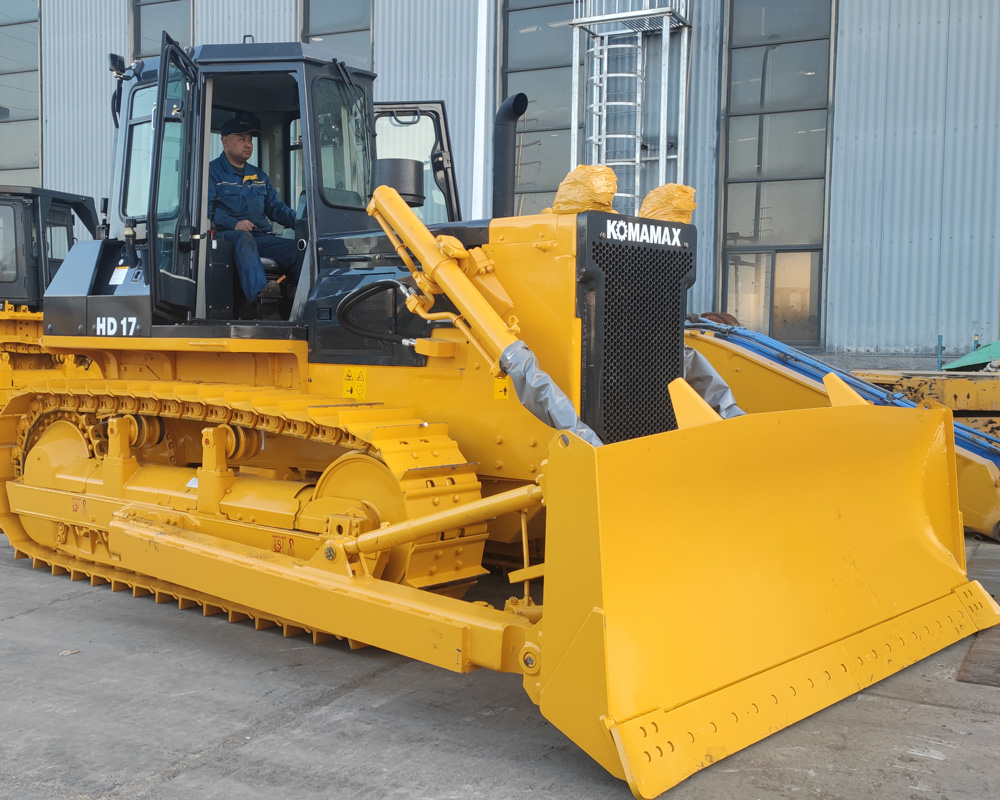
The 178HP hydrostatic bulldozer is available in standard, super-wetland, coal, sanitation, forest and desert versions. A version is not a stack of options but a complete machine solution for different working conditions. Based on verified data:
| Version | Operating weight (kg) | Ground pressure (kPa) | Track shoe width (mm) | Blade type and width (mm) |
|---|---|---|---|---|
| Standard | 17730 (with ripper)/19290 (with tiller) | 65 (with ripper)/77 (with tiller) | 510 (standard)/560/610 | Straight tilt blade 3452 / semi-U blade 3415 |
| Super-wetland | 19690 | 30.5 | 1100 (standard)/950 | Straight tilt blade 4230 |
| Coal | 18140 | 60.5 | 560 (standard)/510/610 | Coal blade 3905 |
| Sanitation | 20320 | 31.5 | 1100 (standard)/950 | Sanitation blade 4230 |
As the table shows, the super-wetland and sanitation versions use wider track shoes, reducing ground pressure to 30.5kPa and 31.5kPa respectively; the standard version has a ground pressure above 65kPa and is suitable for general earthwork and construction sites. The coal version has a blade width of 3905mm and height of 1228mm, intended for pushing in coal yards, ports and bulk material handling. The version should be determined first by material and ground conditions, not by choosing a model first and then finding reasons for it.
Stage 2: Verify undercarriage and travel conditions
The machine uses dual-circuit electric hydrostatic drive and supports stepless speed regulation for load steering and fixed steering. Minimum ground clearance is 410mm, and the minimum turning radius is 3745mm for the standard version, 3895mm for the super-wetland and sanitation versions, and 4246mm for the coal version. Before entry, confirm whether these dimensions leave sufficient margin based on site passage width, turning space and ramp conditions. On soft wet ground, also verify the correspondence between track shoe width and actual ground pressure; the ground pressure of the standard version must not be applied to wetland conditions.

Stage 3: Verify power and continuous operation arrangements
The machine is equipped with a Weichai WP7 China IV electronically controlled engine with rated power of 152kW/1800rpm, corresponding to 178HP. Fuel tank capacity is 352L, and the data states support for continuous operation of more than 14 hours; the working hydraulic oil tank is 85L. These figures can be used for preliminary estimates of refueling or energy replenishment arrangements within a shift, but actual continuous operating duration also depends on load, power mode selection and on-site refueling conditions, and cannot be taken directly as a guaranteed value. The three power modes can be switched according to load; before entry, it should be clear who sets them and according to what rules they are used.
Stage 4: Verify blade, ripper and work equipment
The standard version can be equipped with a straight tilt blade or semi-U blade, and an optional three-shank ripper with a tearing depth of 475mm and ripper lift height of 570mm. If the site has hard soil or frozen soil that needs loosening, the ripper configuration should be clearly specified in the contract and entry checklist; if not, the blade type is determined by the material to be pushed and the pushing distance. The coal and sanitation versions are not equipped with a ripper or winch, which must be aligned with site requirements during verification.
Stage 5: Verify transport and unloading conditions
Overall dimensions vary by version: standard 5465×3452×3154mm, super-wetland and sanitation 5500×4230×3191mm, coal 5905×3905×3154mm. Because of the widened track shoes, the super-wetland and sanitation versions have significantly increased transport width, so bridge and culvert width limits, turning radii and unloading areas along the access road must be confirmed in advance. The transport plan should comply with local road management regulations; this article does not provide specific transport operation steps.
Stage 6: Verify operation and maintenance support
The machine uses a single joystick to control travel and work equipment, has a six-sided integrated cab, standard rear-view camera, and an 8-inch display terminal providing fault self-diagnosis. The externally mounted work valve and track rollers facilitate maintenance, and side-opening guards provide maintenance space. Before entry, confirm that operators have completed the corresponding training, that accompanying documents, filters and wearing parts lists are complete, and that maintenance work is carried out according to the manual. This article does not provide maintenance intervals or disassembly and repair steps; refer to the accompanying documents and manufacturer instructions for details.
Which situations are items to be confirmed
- Whether the slope and side tilt conditions of the specific site are within the equipment's allowable range must be confirmed based on on-site measurements and the manual.
- The actual bearing capacity, groundwater level and risk of getting stuck on soft wet ground must be judged after on-site survey.
- The actual matching effect of continuous operating duration, fuel consumption and power modes must be evaluated based on load and operating habits; the 14 hours in the data is a nominal condition.
- The actual configuration and delivery cycle of the forest and desert versions must be confirmed item by item with the supplier.
- Local registration, restricted-area and annual inspection requirements for China IV emission machinery must be verified according to local management regulations.
Conditions to provide together when requesting a quotation
If you plan to request a quotation for a hydrostatic bulldozer, it is recommended to organize the following information into a checklist: material type and density, average daily pushing volume or work area, ground moisture and bearing conditions, site dimensions and slope, transport road width and height limits, shift arrangements and refueling conditions, blade and ripper requirements, and emission and environmental requirements. The more specific the conditions, the better the supplier can determine which version corresponds to the site, rather than giving a general standard-version price. For detailed information on this model, see the product page on this site; page information is subject to formal technical documents.