






















In loading tasks, tonnage is often used as the first screening criterion: if tonnages are close, loading capability is assumed to be close. What actually determines whether loading runs smoothly is the match between bucket capacity and material bulk density, between digging force and soil/rock conditions, and between working range and truck positioning and bed height. Tonnage only indicates the machine's class range; it cannot by itself answer "how fast will this machine load this material."
Below, using verified data for a 38-ton crawler excavator as an example, we explain which conditions to look at beyond tonnage and when those conditions constitute a valid basis for selection.
Three types of conditions easily missed when judging by tonnage
Matching material and bucket capacity
The data gives a bucket capacity of 1.7m³. With the same 1.7m³, loading loose earth and loading blasted rock means different material weight per bucket, and both cycle count and fill factor change. Looking only at tonnage, you cannot judge how much this machine loads per bucket under the current material, or whether bucket capacity is too large for the digging force or too small and causing extra cycles.

Digging force and ground conditions
In this machine's data, maximum bucket digging force is 244kN and maximum arm digging force is 200kN. These values correspond to heavy-duty digging scenarios, but whether they can be realized depends on whether the material is loose soil, compacted soil, or rock requiring breaking. If site material hardness exceeds the normal penetration range of the teeth, breaking or loosening operations should be considered before the loading cycle itself; loading capability should not be reduced simply to machine size.
Working range and truck positioning
The data lists a maximum digging radius of 11,178mm, maximum digging depth of 7,372mm, maximum dump height of 7,572mm and maximum digging height of 10,511mm. These values determine where the transport truck can park and at what bed height unloading remains smooth, and whether frequent repositioning is needed. Machines with the same tonnage but different working ranges can perform noticeably differently at the same loading point.
What this 38-ton crawler excavator's data can tell you about loading needs
The machine is rated at 219kW (294.2HP), powered by an SL 9 turbocharged engine, with hydraulic system pressure of 35MPa and dual-pump confluence technology. For continuous loading, the significance of these figures is whether the power and hydraulic configuration support long shifts and whether boom and arm response helps reduce waiting in the cycle. These are things to confirm against your own shift intensity and operating rhythm, not just compare as numbers.

The data also mentions a fully welded boom that has been bored and shot-peened, forged structures at key pivot points, a track frame designed to reduce mud accumulation, and a heavy-duty bucket using wear-resistant steel and thickened side plates. For muddy loading points and highly abrasive materials, these structural descriptions can serve as points to verify; but they do not mean the undercarriage and work equipment need no wear inspection under any conditions.
Conditions still to confirm beyond the data sheet
- Transport conditions: overall dimensions are 11285×3190×3664mm, track gauge 2590mm, minimum ground clearance 536mm, tail swing radius 3590mm. Access road width, turning radius, flatbed load capacity and height limits must be checked item by item.
- Site bearing capacity and slopes: the data gives a maximum gradeability of 35°, but actual slope travel is also affected by surface adhesion, soft ground after rain and load distribution, and must be confirmed on site.
- Supporting vehicles: truck bed height, per-truck capacity and loading point layout determine whether the working range is sufficient and what proportion of the cycle is waiting time.
- Material bulk density and blast fragment size: these directly affect actual payload with the 1.7m³ bucket and tooth wear; the data gives no corresponding limits, so calculate separately based on site material before purchase.
- Maintenance conditions: the data mentions a centralized filter group, ground-accessible maintenance points, and an LCD screen showing engine speed, temperature and oil pressure. Specific service intervals and inspection items should still follow the accompanying manual and not be inferred from promotional descriptions.
A more reliable order of judgment
First lock in the material and transport vehicles, then check whether working range and dump height meet positioning needs, then compare whether bucket capacity, digging force and hydraulic configuration can support the expected shift, and finally check access transport and site bearing capacity. Tonnage belongs at the step of confirming machine class, not at the very front as a conclusion.
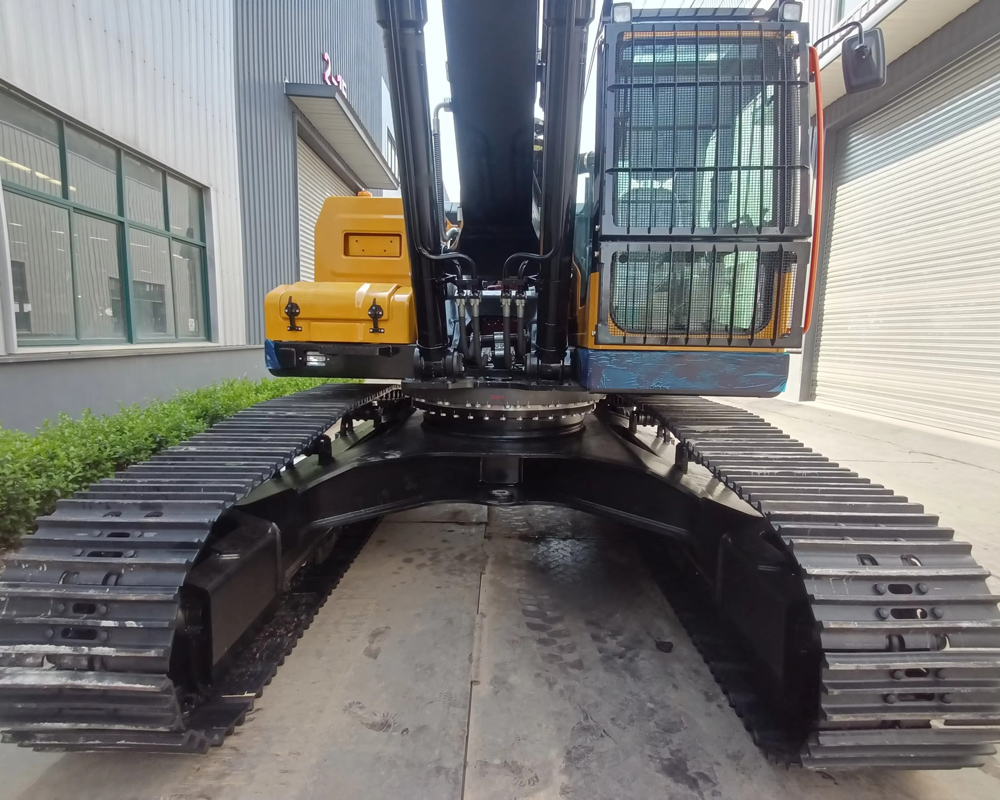
If the site mainly loads loose earth with fixed truck positioning, working range and cycle coordination will affect actual rhythm more than tonnage alone; if material is hard or the site is muddy, the weight of digging force realization, undercarriage mobility and ease of wear-part replacement rises. In these two cases, the same machine's suitability is not the same.
Information to prepare before requesting a quote
When requesting a quote for a loading task, provide material type and approximate bulk density, daily loading volume or truck count, transport truck bed height and capacity, loading point site dimensions and bearing conditions, shift length, whether breaking or loosening support is needed, and access road and transport restrictions. For work equipment, confirm bucket specification and tooth type; for the undercarriage, confirm track shoe type and ground conditions. The more specific this information, the better you can judge whether this 38-ton model falls within the applicable range; anything not covered by the data should be confirmed item by item during quotation and technical review.