






















Pre-start readiness for heavy-duty mine hauling is often simplified to the question of whether horsepower is sufficient. What truly tends to surface after mobilization is whether the undercarriage can withstand continuous impact, whether the blade and ripper match the material, whether hydraulic and electrical monitoring make early problem detection easy, and whether safety protection and maintenance space are adequate. Using verified data for a 600-hp-class large crawler dozer as a reference, this article breaks readiness checks into a sequence that can be implemented item by item for pre-start inspection.
First, a clarification: the following content is program analysis and data comparison, not a record of a completed project. Mine conditions vary greatly, and whether equipment is suitable still depends on material, haul distance, slope, and shift arrangements.
First, clarify the site problems that readiness must address
Heavy-duty mine hauling typically faces several constraints: material contains rocks, causing large fluctuations in dozing resistance; the working face advances quickly, and equipment runs continuously for long periods; the site is undulating with many slopes, subjecting travel and steering to frequent loads; and equipment downtime affects the entire production line. The purpose of readiness checks is not to pile on configurations but to reduce unplanned downtime after start-up.
Translating these constraints into verifiable equipment conditions yields roughly four items: impact resistance of the undercarriage and travel system, matching of the work equipment to the material, continuous stability of power transmission, and convenience of daily inspection and protection. The following sections follow this order.
Undercarriage and travel system: look at structure first, then ground contact conditions
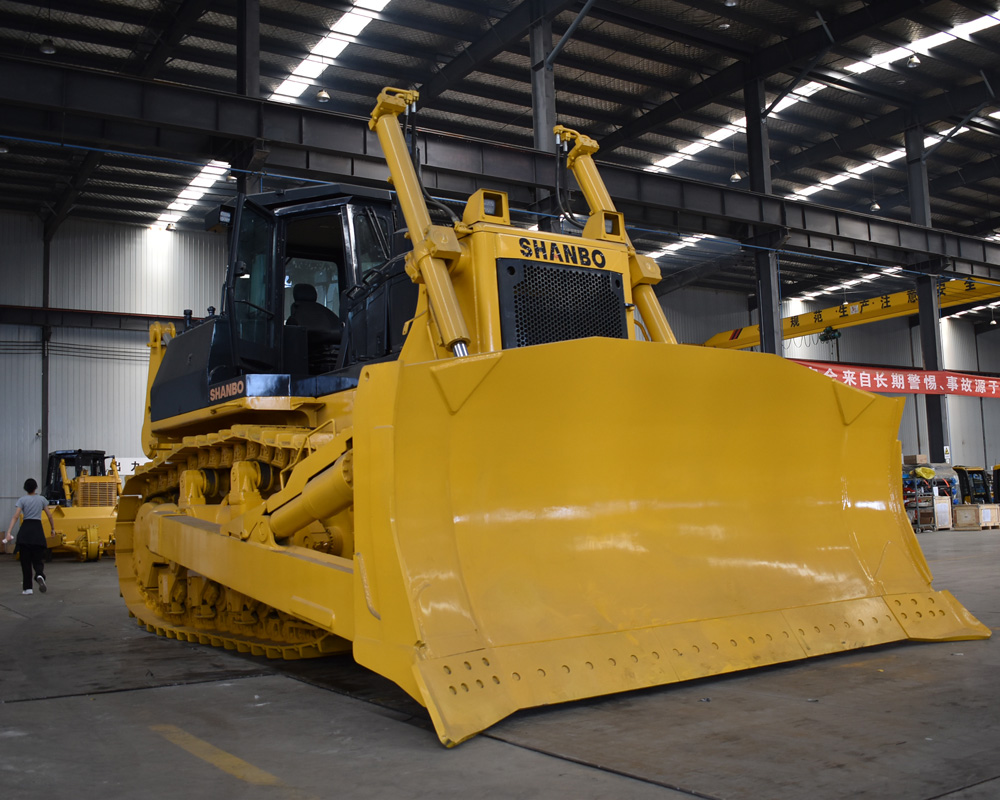
In heavy-duty dozing, the impact on the undercarriage is often more worthy of attention than tractive force. Data for the reference model shows it adopts a K-shaped suspension floating drive structure and an integral articulated undercarriage to buffer impact loads during travel and operation; the track chain is fully sealed and lubricated, with an integrated design for the master link. For mine sites with abundant rocks and undulating ground, the questions corresponding to this structural information are: whether the undercarriage can remain stable under repeated impact, and whether track chain wear and disassembly maintenance are controllable.

The data also gives an operating weight of 54,000 kg, ground pressure of 0.123 MPa, gradeability of 30°, minimum ground clearance of 525 mm, and track gauge of 2,260 mm. During readiness, these values are used for comparison with the site, for example: whether the bearing capacity of access roads and the working face meets the requirements of equipment at this weight class; whether soft ground or backfill areas need prior treatment; and whether actual ramp gradients fall within the capability range stated in the data. They must not be interpreted as meaning the machine can pass through any mine terrain.
During readiness, the following can be confirmed item by item:
- Bearing conditions of the access route and working face, and whether paving or reinforcement is needed;
- Whether working face slope, lateral inclination, and turning radius match equipment dimensions;
- Whether arrangements exist for checking track tension, sealed lubrication, and travel components;
- Whether rock size and ground protrusions will cause continuous impact on the undercarriage.
Blade and ripper: match the material before discussing dozing efficiency
The reference model's standard configuration is a semi-U blade with a capacity of 16 m³, blade width of 4,314 mm, blade height of 1,841 mm, maximum cutting depth of 700 mm, and maximum blade tilt of 1,000 mm; at the rear is an adjustable-angle single-shank heavy-duty ripper. The data describes this type of blade as suitable for large-area earth-rock stockpiling and bulk material handling, with the ripper used for deep ripping, rock breaking, and hard-ground ripping.
During readiness, material conditions should be matched against these two implements: whether the main task is pushing loose material or whether ripping is needed before dozing; the proportion of large rocks in the material; and whether the working face allows point-by-point breaking with a single-shank ripper. If the site is mainly hard-rock stripping, whether the dozer blade alone is sufficient needs separate confirmation and cannot be concluded directly from the data.

| Check item | Data basis | Site confirmation needed |
|---|---|---|
| Material to be pushed | Semi-U blade, capacity 16 m³ | Ratio of loose material to block rock, bulk density |
| Cutting depth | Maximum cutting depth 700 mm | Actual layer thickness and soil/rock hardness |
| Ripping requirement | Adjustable-angle single-shank heavy-duty ripper | Proportion of hard ground and rock breaking, ripping procedure arrangements |
Power transmission and hydraulics: continuous operation depends on stability
Data shows the model adopts a hydraulic power-shift transmission with planetary final drives; the transmission assembly is equipped with multi-plate hydraulic clutches and forced circulation lubrication, while the final drive uses spiral bevel gears with splash lubrication; an integrated hydraulic cushioning structure absorbs impact loads in power transmission. On the hydraulic side, the working hydraulic cylinders are optimized, core seals and high-pressure hoses use imported high-standard components, and the working valve group is externally mounted for easy inspection, removal, and maintenance.
These features correspond to the needs of continuous mine dozing: whether power output can adjust to changes in external load, whether impact loads are absorbed, and whether hydraulic system inspection and maintenance are convenient. During readiness, this can be used to confirm hydraulic oil level, oil temperature monitoring, inspection arrangements for hoses and seals, and accessibility of the externally mounted valve group. The data does not provide specific comparative figures for fuel consumption, efficiency, or service life; related judgments should be left for observation during actual use.
Electrical monitoring and safety protection: prepare the conditions for early problem detection
The reference model is equipped with a combination instrument panel that monitors key data such as hydraulic oil temperature, oil level, and coolant temperature and provides over-limit alarms; the machine is equipped with safety warning lights, reversing audible alarms, horn, and braking system, with standard ROPS rollover protection and FOPS falling-object protection structures, and an optional upgraded integrated ROPS & FOPS protective frame. The data also mentions that the cab is fully enclosed with air conditioning and damping components.
Mine sites involve frequent cross-operation of personnel and equipment, so during readiness it should be confirmed that: alarm devices and warning lights work properly; the protection structure version matches on-site falling-object and rollover risks; and cab visibility and damping meet the needs of long shifts. It must be emphasized that protective structures are risk-reducing configurations and do not replace on-site safety management measures.
Maintenance accessibility and pre-start documentation preparation
The data mentions that maintenance reminder stickers are placed in prominent positions on the machine, the engine hood is a large opening type for easy inspection of core components, and a maintenance-free battery is standard. The main frame is a fully enclosed box structure using high-strength wear-resistant steel and heavy-duty cast steel parts. This information corresponds to the convenience of daily inspection, not maintenance intervals. Specific inspection items, intervals, and disassembly/repair procedures should be based on the equipment manual and on-site maintenance system; this article does not provide maintenance intervals or disassembly/repair procedures.
Before start-up, it is recommended to finalize the following documents and conditions:
- Whether the equipment manual, maintenance handbook, and accompanying documents are complete;
- Whether operators and maintenance personnel have completed corresponding training;
- Supply arrangements for spare parts, oils, and wear parts;
- Transport plan: the model has an operating weight of 54,000 kg and blade width of 4,314 mm; transport dimensions and road clearances must be checked against actual transport conditions;
- Whether shift arrangements leave sufficient time for refueling and inspection.
Which conditions still need confirmation
The data covers structure, configuration, and main specifications but does not provide conclusions on suitability for a specific mine. Before purchase or mobilization, the following still need confirmation: material composition and hardness, dozing distance, working face slope and bearing capacity, local emission and noise requirements, transport route clearances, and after-sales service and spare parts response. If the site is mainly wet ground or soft backfill areas, or requires frequent relocation, a separate assessment should be made of whether it meets the mobilization conditions for equipment of this weight class.
Conditions that can be provided when requesting a quotation include: material type and lump size, average daily dozing volume or working face advance, dozing distance, site slope and bearing capacity, shift arrangements, transport method and route clearances, and specific configuration requirements for blade, ripper, and protective structures. Writing these conditions clearly makes it easier to obtain a verifiable proposal than simply asking "how much per unit."