






















Equipment decisions for large earthworks and quarries usually do not start with "what tonnage to choose," but with whether the site can accommodate the machine, whether hauling can keep up, and whether the material can withstand the cutting forces. The 37-ton crawler excavator is described in the data as targeting open-pit mining, quarrying, large infrastructure, foundation engineering and heavy earthworks, which provides a starting point for discussion; whether it suits a specific project still requires matching data fields to site conditions item by item. The following sections, based on the verified parameters of this machine, explain its capability boundaries and the items to confirm before purchase.
Define the work objective first: which part of the job the machine must complete
In large earthworks and quarries, crawler excavators are often placed in the "excavation—loading" chain rather than existing in isolation. Judging whether one is sufficient requires answering at least three questions: can the workface allow it to swing and travel normally; how much cutting force does the material require; and can the matched haul trucks keep up with its loading rhythm. The data lists a bucket capacity of 1.62–1.82 m³, bucket digging force of 230 kN and arm digging force of 190 kN; these figures can be used to compare against material and loading targets, but cannot directly derive actual output in any given rock formation.
Power and hydraulics: relation to continuous heavy-duty operation
This model is equipped with a 6-cylinder turbocharged intercooled engine with 7.79 L displacement, rated power of 242 kW/2000 rpm and fuel tank capacity of 580 L. The data positions it as maintaining power output in heavy-load environments. For buyers, the more practical meaning of these figures is that it is heavy equipment requiring fuel replenishment by shift; continuous operation capability is determined jointly by refueling organization, operator skill and material conditions, and power alone cannot indicate how much volume can be completed per shift.

On the hydraulic side, the data specifies a dual variable piston pump plus gear pump configuration, with maximum operating flow of 2×330 L/min, main system pressure of 36 MPa and travel circuit pressure of 36 MPa. The high-flow configuration corresponds to the need for combined operations and response speed; but loading cycle speed also depends on swing speed (listed as 9.7 rpm), bucket fill factor and truck parking position, and cannot be concluded from flow alone.
Site and travel conditions: hard constraints imposed by tonnage
The 37-ton operating weight and 600 mm track shoe width mean clear requirements for workface bearing capacity and haul roads. The data lists overall width of 3200 mm, track ground contact length of 4080 mm and ground pressure of 62 kPa; these fields are used to check whether soft ground, backfilled areas and temporary roads have the bearing capacity. Gradeability is listed as 70% (35°) and minimum ground clearance as 565 mm, indicating the data provides a capability statement for slope travel; but whether it can safely ascend and descend a slope in practice still requires separate confirmation based on slope material, wetness and load state, and the rated gradeability cannot be treated as permission to travel on any slope.

Working range corresponding to workface layout
The data lists maximum digging depth of 7240 mm, maximum digging height of 10134 mm, maximum dumping height of 7182 mm and maximum digging radius of 11051 mm, which can be used to work backward to whether bench height, truck parking height and swing radius match. If a quarry uses benching, bench height and vehicle parking positions need to fall within these ranges, rather than laying out the site according to the machine's maximum range first.
Transport and relocation: easily overlooked prerequisites
Overall length of 11161 mm, ground contact length during transport of 5872 mm, overall height to boom top of 3347 mm and counterweight ground clearance of 1312 mm determine the towing plan and clearance requirements for access roads. Large earthworks projects often encounter bridge height limits, temporary road turning radii and loading/unloading site issues at the equipment mobilization stage; these conditions should be verified with the transporter before purchase rather than adjusted after the machine arrives.
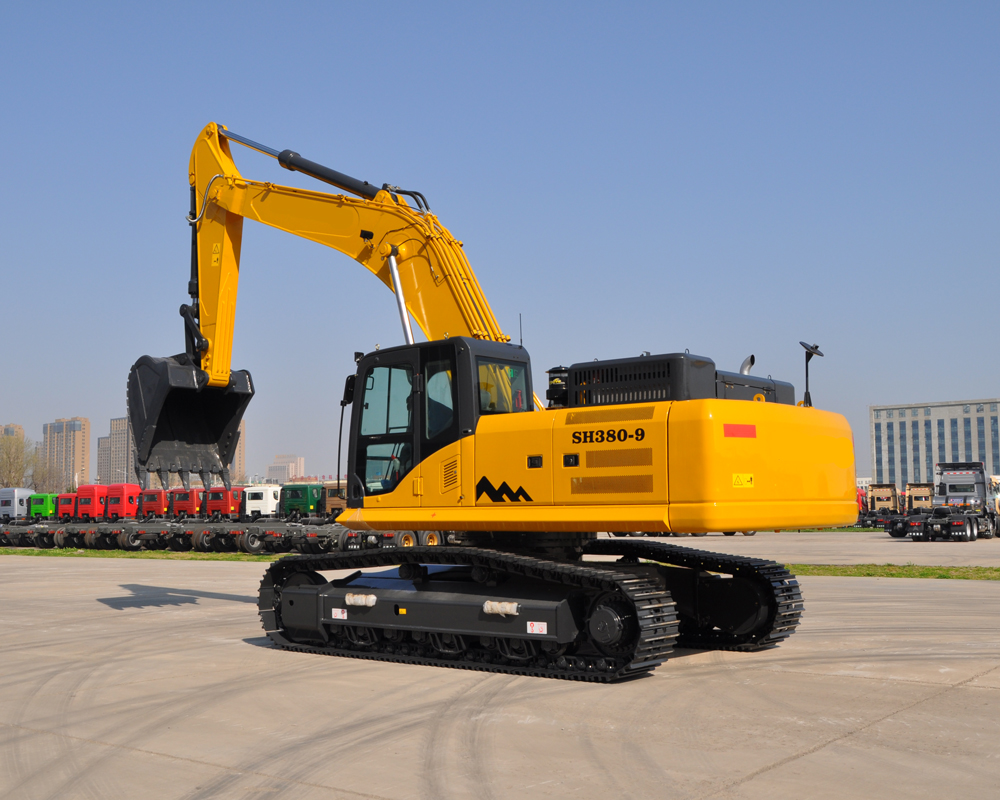
Which parameters support judgment, and which still need on-site verification
| Site question | Comparable data fields | Items still to confirm |
|---|---|---|
| Is material cutting difficult | Bucket digging force 230 kN, arm digging force 190 kN, bucket capacity 1.62–1.82 m³ | Rock strength, joint development, whether blasting or ripping pretreatment is needed |
| Can loading keep pace | Maximum dumping height 7182 mm, swing speed 9.7 rpm, hydraulic flow 2×330 L/min | Truck bed height and tonnage, number of trucks in rotation, loading platform layout |
| Can the workface bear the load | Operating weight 37000 kg, ground pressure 62 kPa, track shoe width 600 mm | Foundation bearing capacity, softening in rainy season, temporary road structure |
| Are slopes and relocation feasible | Gradeability 70% (35°), minimum ground clearance 565 mm, overall dimensions | Slope material and wet/slippery state, transport height/width limits, loading/unloading site conditions |
The purpose of this comparison table is not to conclude "usable" or "not usable," but to link data fields to site questions one by one. Any item in the third column that has not been resolved cannot be finally judged based on equipment parameters alone.
Information checklist to prepare before purchase
- Material type and state: earth, crushed stone or intact rock, and whether blasting or ripping pretreatment has been done.
- Work volume: planned shifts, daily loading targets and coordination with haul trucks.
- Workface conditions: bench height, swing space, foundation bearing and drainage.
- Transport conditions: towing route height/width limits, access road turning radius, loading/unloading site.
- Power and supply: fuel replenishment arrangements, continuous shift length, operator staffing.
- Configuration check: bucket specification, track shoe width, and whether the work equipment matches the actual material.
After clarifying these conditions, verify configuration and delivery plans with the supplier; this is more reliable than fixing tonnage first and then looking for justification. The data shows this 37-ton crawler excavator targets heavy earthworks and quarrying, but whether it applies to a specific project ultimately depends on whether the above site conditions can be confirmed item by item.