






















In a project that involves both dry, hard earthmoving and work on riverbanks, swamp edges or soft ground after the rainy season, a common purchasing approach is to select a dozer by power first and then consider the version. However, on the same power platform, the Standard and Super-Wetland versions differ in ground pressure, track width and blade size. When switching job sites, what really needs to be verified is which set of ground contact and blade conditions matches the current work surface, not whether the horsepower is sufficient.
The following uses the Standard and Super-Wetland versions of a 178HP hydrostatic dozer as an example to explain the differences between the two versions at the documentation level and the conditions that need to be confirmed item by item when switching job sites. All figures in this article come from the product documentation; parameters of other brands or models cannot be directly applied.
First, distinguish what work surfaces each version is intended for
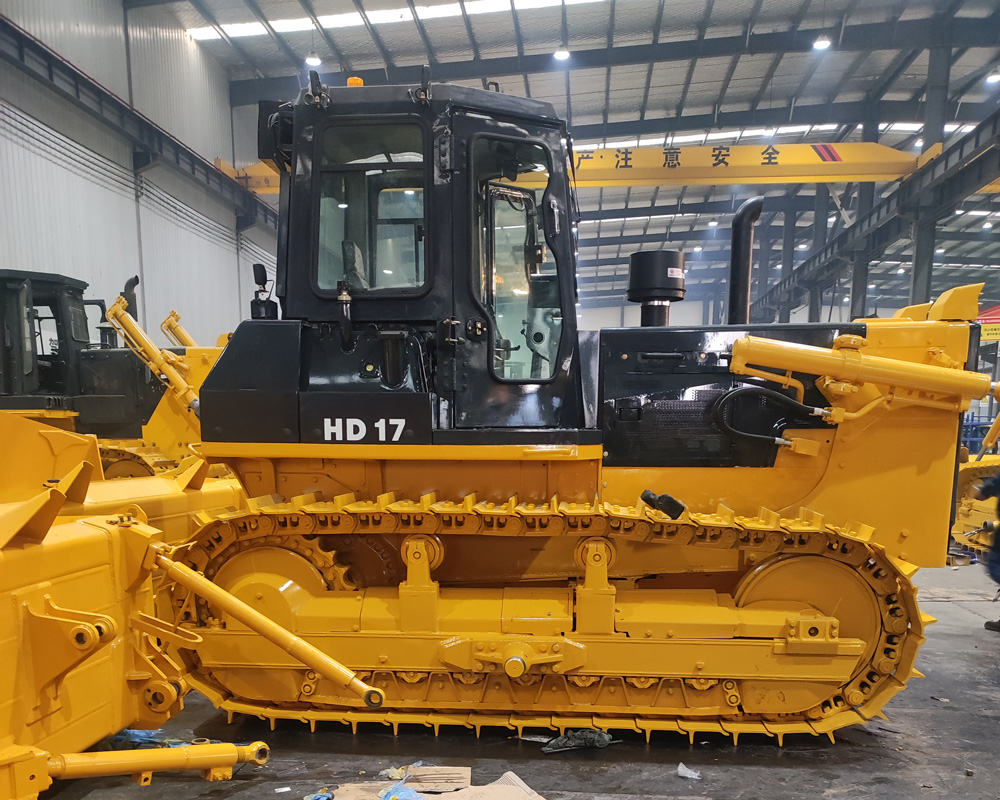
This dozer is equipped with a WP7 China IV engine with a rated power of 152kW/1800rpm, corresponding to 178HP, and adopts dual-circuit electric hydrostatic drive, with both forward and reverse speeds of 0–10km/h. According to the version breakdown provided in the documentation, the Standard version is intended for general earthmoving projects, construction sites, road building, mining and short-distance material transport; the Super-Wetland version is intended for swamps, wetlands, riverbanks, soft ground, water conservancy projects and muddy work sites.
The differences between the two versions are not only in name but also in undercarriage ground contact parameters and blade specifications. If a project requires moving back and forth between two types of sites, the basis for judgment should be the bearing conditions, trafficability requirements and material to be pushed at each work surface, rather than the overall machine power alone.

Ground pressure and track configuration determine soft-ground trafficability
The key differences between the two versions in the documentation are shown in the table below. Standard version values are listed separately for configurations with ripper and with drawbar; the Super-Wetland version has a single configuration.
| Item | Standard version | Super-Wetland version |
|---|---|---|
| Operating weight | 17730kg (with ripper)/19290kg (with drawbar) | 19690kg |
| Ground pressure | 65kPa (with ripper)/77kPa (with drawbar) | 30.5kPa |
| Track shoe width | 510mm (standard)/560mm/610mm | 1100mm (standard)/950mm |
| Track gauge | 1880mm | 2350mm |
| Ground contact length | 2675mm | 2935mm |
| Minimum ground clearance | 410mm | 410mm |
The Super-Wetland version has a ground pressure of 30.5kPa, significantly lower than the Standard version's 65kPa or 77kPa, mainly due to the combination of 1100mm wide tracks, 2350mm track gauge and 2935mm ground contact length. For swamps, riverbanks and soft ground, this set of parameters corresponds precisely to the approach of reducing pressure per unit area and lowering the risk of sinking. The Standard version with ripper configuration has a ground pressure of 65kPa, making it more suitable for conventional earthmoving and road-building sites with relatively well-defined bearing conditions.
It should be noted that low ground pressure does not mean any soft ground can be traversed directly. Actual on-site bearing capacity is also affected by moisture content, surface vegetation, season and travel route. The documentation does not provide allowable bearing values for different soil types; before purchase, specific site conditions should be confirmed with the supplier, and on-site trial pushing should be arranged where necessary.
Blade specifications vary by version; pushing tasks must be checked separately
The blades of the two versions are not interchangeable. The Standard version has a straight tilt blade or semi-U blade, with a width of 3452mm or 3415mm, height of 1127mm or 1200mm, blade lift height of 510mm and digging depth of 520mm; the Super-Wetland version has a straight tilt blade with a width of 4230mm, height of 1040mm, lift height of 1020mm and digging depth of 485mm.

These differences correspond to different operational emphases: the Standard version blade is relatively narrow and tall, suitable for conventional earthmoving and rough site leveling; the Super-Wetland version blade is wider with greater lift height, related to its pushing and spreading needs in soft ground and water conservancy projects. If both types of work exist in the same project, it is necessary to confirm whether the blade is supplied with the machine when switching versions, whether it can be changed on the same machine, and the impact of the change on the machine's center of gravity and trafficability. These points are not covered in the documentation and should be listed as items to be confirmed.
Power and transmission are the same; differences center on ground contact and work equipment
The two versions share the WP7 China IV electronically controlled engine, dual-circuit electric hydrostatic drive, 352L fuel tank and 0–10km/h travel speed, and the cab, control system and maintenance layout also belong to the same platform. In other words, the focus of version selection is not whether power is sufficient, but whether the undercarriage ground contact configuration and blade match the work surface.
For projects that need to switch between wetland and conventional earthmoving, the following sequence can be used for verification:
- First clarify the soil type, moisture state and bearing conditions of each work surface, and determine whether soft ground, swamp or riverbank sections exist.
- Check the required ground pressure range according to the most unfavorable soft-ground conditions, then compare with the ground pressure, track shoe width and ground contact length in the version documentation.
- Separately check the material to be pushed and blade requirements for the two types of sites, and confirm whether blade width, height and lift height cover the main operations.
- Confirm whether switching between versions involves replacement of tracks, blades and other components, as well as the time and supporting conditions required for replacement.
- Include transport dimensions, site access roads and relocation methods in the verification to avoid looking only at operating parameters.
Applicable boundaries and conditions still to be confirmed
According to the documentation, the Super-Wetland version's low ground pressure configuration corresponds to soft-ground trafficability requirements, while the Standard version is intended for general earthmoving, road building and mining sites. However, the documentation does not provide conclusions on the allowable bearing capacity of the two versions under specific soil types, maximum wading depth, slope operation capability or continuous operation duration, nor does it provide actual fuel consumption or efficiency comparisons between versions. Therefore, it cannot be concluded from the available documentation that a particular version is suitable for any wetland or slope.
Before purchase, it is recommended to confirm with the supplier: whether the soil type and bearing conditions of the target site fall within the applicable range of the version; the trafficability and pushing performance of the Super-Wetland version on non-soft sections of the project; whether blades, rippers and other attachments are supplied with the version; transport dimensions and relocation arrangements; and whether local entry requirements for China IV emission equipment have been implemented. In the documentation, the ripper appears only in the Standard version configuration description; whether the Super-Wetland version can be equipped with a ripper is not stated and should be confirmed separately.
If the project is mainly conventional earthmoving with only occasional short-term soft-ground work, first evaluate whether the Standard version combined with site treatment measures is feasible; if soft-ground work accounts for a high proportion or involves frequent entry and exit, the Super-Wetland version's ground contact configuration deserves more comparison. The final choice should still be verified item by item against the bearing conditions of specific work surfaces, the material to be pushed and relocation arrangements.