






















When the surface of clay or frozen soil hardens, a bulldozer blade often slips and cannot cut in, and material piles up in front of the blade without flowing. In this case, splitting the process into "ripping first, then pushing" is often more reasonable than repeatedly increasing engine speed. However, ripper configuration is not simply adding an attachment; it must match the machine's power, undercarriage ground contact, blade type and frozen-layer thickness. This article outlines a verifiable approach to configuration trade-offs for this working goal.
First distinguish: is the problem the blade or the material
The same inability to push may have different causes. One is that the material itself is hard, sticky and frozen, making it difficult for the blade edge to cut in; the other is that the ground is wet and soft, causing track slip or sinking. The former calls for a ripping device, while the latter requires checking ground pressure and track shoe width first. Mixing the two can lead to still being unable to push after fitting a ripper, or adding shanks when the wet-land undercarriage should have been used.
A simple initial check: can the blade edge bite into the material surface when the blade is pressed down? If the surface barely takes the blade and a hard crust forms in front of the blade, it is a sign that pre-ripping is needed; if the whole machine slips in place and the tracks sink noticeably, return first to the ground bearing issue. This is only a preliminary on-site observation and must ultimately be confirmed together with soil type, moisture content and frozen-layer depth.

Matching relationship between ripper configuration and the machine
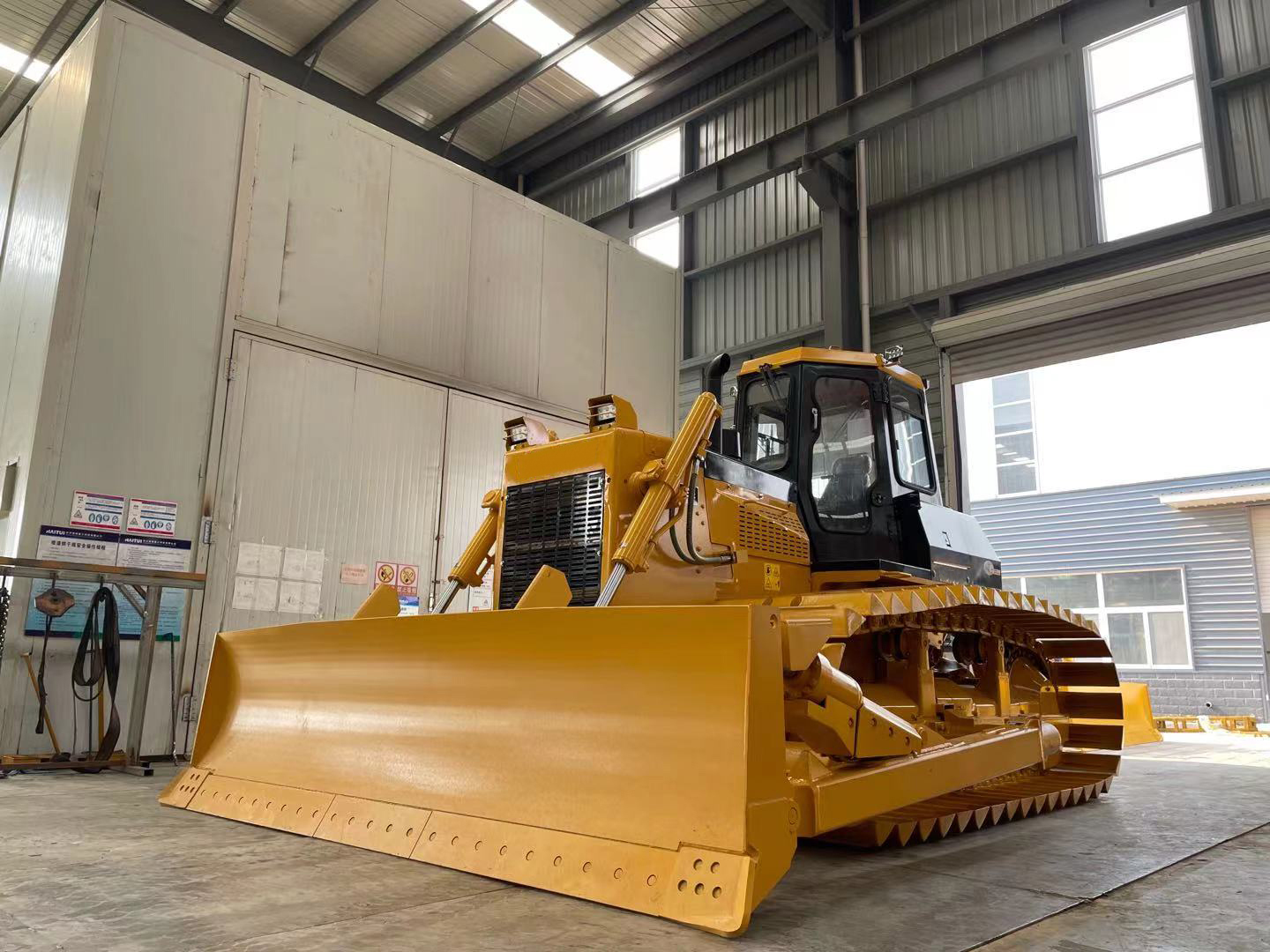
Taking the SD16 data on this site as an example, this model is a 178-hp class crawler bulldozer with a rated power of 131 kW and engine model WP10. It is equipped with a straight blade as standard, and the data states that it is fitted with a three-shank ripper for breaking clay and frozen soil. "Fitted" here means the ripping device is one of the machine's work equipment options, not separate equipment.
The lift height of the three-shank ripper in the data is 570 mm. This value is more useful for judging the lifting and clearance space of the ripper shanks and cannot be directly equated with the rippable depth; the actual ripping depth also depends on soil type, frozen-layer thickness, tip wear and machine traction. If the lift height is misunderstood as ripping depth during procurement, it is easy to misjudge the process capability.
Power and undercarriage: the force direction changes during ripping
During pushing, the load is mainly along the forward direction; during ripping, the shank tips are loaded downward and backward, so the machine needs greater traction reserve and a more stable undercarriage. The SD16 data gives an operating weight of 17000 kg (standard version), ground pressure of 58 kPa, ground contact length of 2635 mm and track shoe width of 510 mm. These figures indicate a medium-sized configuration for conventional ground conditions; when used for ripping, attention must be paid to whether the ground can bear the reaction force at the shank tips.

On wet, soft or freeze-thaw alternating ground, whether 58 kPa ground pressure is suitable is not concluded in the data and should be listed as an item to confirm. If the site is soft, the ground pressure data of the wet-land version in the same series can be checked separately, but parameters of different versions must not be applied interchangeably.
Connection between blade type and the ripping process
The blade types listed in the SD16 data include angle blade, straight blade and U-blade, with widths of 4011 mm, 3455 mm and 3556 mm respectively and a blade depth of 540 mm. When pushing immediately after ripping, blade width is related to pushing volume and site width; the straight blade suits conventional pushing, the angle blade is useful on slopes or for side casting, and the U-blade favors large-capacity material collection. The data does not state combination restrictions between each blade and the ripper, so during selection it should be confirmed with the supplier whether the mounting interface and hydraulic circuit for the ripping device and blade on the same machine are compatible.
Checklist by process step
- Material: clay or frozen soil, approximate frozen-layer thickness, whether stones are present; high stone content will noticeably accelerate wear of tips and shanks.
- Ripping depth requirement: whether it matches the actual working depth of the three-shank ripper; the data only gives a lift height of 570 mm, which needs separate confirmation.
- Ground bearing: whether the 17000 kg operating weight and 58 kPa ground pressure suit the current site, and whether wet-land configuration is needed on soft sections.
- Work organization: whether ripping and pushing are completed continuously by the same machine or alternately by zone, which affects the frequency of removing and installing the blade and ripper.
- Transport: overall dimensions are 5140 × 3455 × 3024 mm; transport vehicles and road clearances must be checked when relocating.
- Maintenance: the data mentions exposed lubrication points such as the fan shaft and equalizer beam; ripper tips are wear parts, so the spare parts supply method should be confirmed.
When not to rush into adding a ripper
If the main on-site problem is track sinking and machine settlement, the priority is to check the undercarriage and ground pressure, not the number of ripper shanks. If the material is mainly loose earth, the straight blade alone can complete pushing, and adding a ripping device only increases machine load and relocation weight. In addition, slope work and ripping near slopes involve machine stability; the data does not give slope capability figures, so this must be assessed separately and cannot be directly applied from flat-ground conditions.
Conditions to provide when requesting a quotation
Before contacting the supplier, it is recommended to organize the following information clearly: material type and frozen-layer thickness, daily ripping and pushing volume, site bearing and slope conditions, relocation distance and transport method, single-shift working hours, desired blade type, and whether the ripping device and blade need to be configured on the same machine. Whether the supplier can provide configuration descriptions and wear-part lists for the corresponding version should also be confirmed at the quotation stage. Once these conditions are complete, it can then be judged whether the three-shank ripping configuration at the SD16 level falls within the applicable range.