






















The same mid-size bulldozer is divided into multiple versions such as standard, wetland, forestry, desert, sanitation, and rock. It looks like there are many choices, but in practice it is easy to mistakenly believe that "buying one more version can cover all working conditions." A version name only represents a configuration direction. Whether it can be applied to a specific site still requires item-by-item verification against material, ground bearing capacity, operating method, and transport conditions.
Version divisions indicate configuration directions, not universal promises
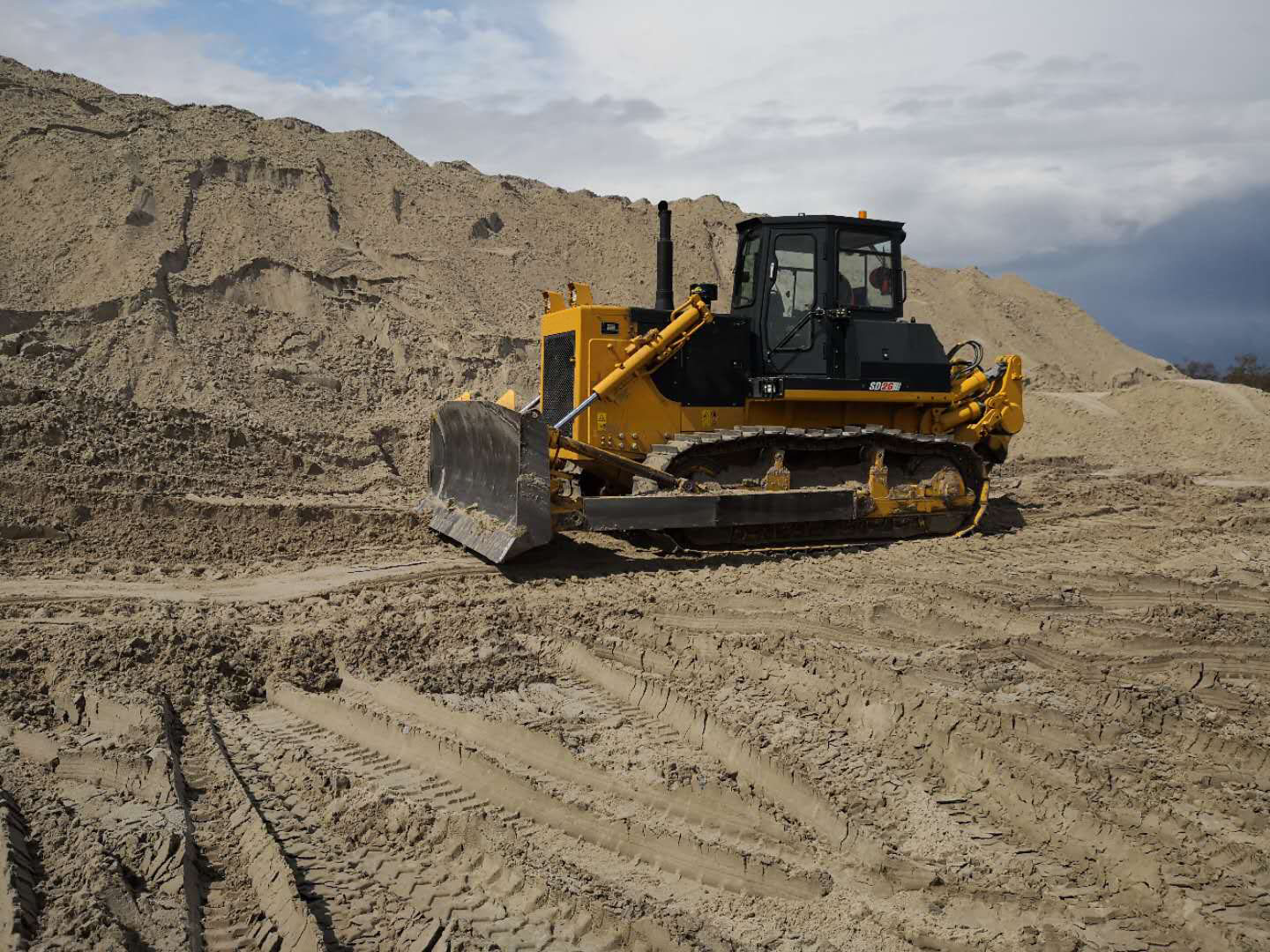
Taking the 260 hp mid-size bulldozer series on this site as an example, the series includes standard, forestry, wetland, desert, sanitation, rock, and other versions. The manufacturer's information summarizes their scope of application as engineering, forestry, environmental protection, and mining construction projects. This information shows that the product line has been extended according to operating scenarios, but it does not provide the capability boundaries of each version under all working conditions.
Therefore, when seeing "wetland version" or "rock version," it should be understood as the name of a configuration combination, not a guarantee that a machine is suitable for any soft foundation or any rock formation. Whether a version matches a working condition requires looking at specific configuration parameters and site conditions.

First define the operating objective, then see which conditions the version corresponds to
Suppose one project is mainly general earthmoving and rough site leveling, occasionally entering softer ground; another project is mainly log skidding after forest harvesting and requires a rollover protection cab and wider tracks. These two objectives correspond to different version directions. The former is closer to the configuration approach of the standard version, while the latter involves the dedicated structure of the forestry version.
According to the information on this site, the standard version is equipped with a straight tilt blade with a capacity of 4.6 m³, and optional angle blade, U-blade, and semi-U blade; the ripper has three shanks, with a maximum penetration depth of 666 mm, maximum lift height of 555 mm, ripper width of 2000 mm, and shank spacing of 930 mm. These configurations are intended for earthmoving and ripping operations in clay, frozen soil, and gravel formations. If the project is mainly soft-ground pushing, then ground pressure, track shoe width, and overall weight should be the focus of verification, rather than judging solely by the version name.
Use verified parameters to check the correspondence between version and working condition
The main parameters given in the base model information for this series are as follows. They can be used as a starting point for discussing configuration adjustments with the supplier during procurement:

| Item | Verified data |
|---|---|
| Operating weight | 23450 kg |
| Engine | WP12G280E304, China-III emissions |
| Gross power | 206 kW (277 hp) |
| Net power | 194 kW (260 hp) |
| Ground pressure | 66 kPa |
| Maximum theoretical drawbar pull | 460 kN |
| Track shoe width | 560 / 610 / 660 mm |
| Blade type and capacity | Straight tilt blade, 4.6 m³ |
| Ripper | Three shanks, maximum penetration depth 666 mm |
The ground pressure and track shoe width in the table are key fields for judging soft-ground adaptability. Which track shoe width the 66 kPa corresponds to and whether it is part of the standard configuration need to be confirmed according to the specific order configuration; what ground conditions the three track shoe widths of 560, 610, and 660 mm correspond to is not explained item by item in the information and should be listed as items to be confirmed before procurement. The forestry version information additionally gives an operating weight of 24700 kg, ground pressure of 64 kPa, 610 mm widened tracks, and an optional mechanical winch. This shows that the parameters of different versions are not the same, and base model data cannot be directly applied to other versions.
Boundary of correct understanding: the version is a starting point, not a conclusion
The value of version division lies in narrowing the scope of configuration discussion, not in replacing working condition verification. A common misunderstanding is believing that choosing the "wetland version" means the machine can operate on any soft ground. In reality, wetland adaptability depends on the combination of ground pressure, track shoe width, overall weight, and the actual bearing capacity of the ground. The information does not provide the applicable lower limits of this series on various soft grounds.
Similarly, the forestry version information mentions a dedicated logging rollover protection cab, rainproof and sunshade structure, and an optional mechanical winch. These are configurations customized for forestry operations, but it cannot be inferred from this that this version has an efficiency advantage in ordinary earthmoving projects. There is no universal "stronger" among versions, only whether they correspond to the operating objective.
Items to confirm with the supplier before procurement
- The project's main material type, pushing distance, and per-shift workload, used to determine whether the blade capacity and ripper configuration match.
- The site's ground bearing conditions and whether a wetland version is needed, and confirm the ground pressure data under the corresponding track shoe width.
- Whether special configurations for forestry, desert, sanitation, or rock are needed, and the impact of these configurations on overall weight and transport dimensions.
- Transport conditions: whether the overall transport dimensions, access road width, and relocation method are consistent with the selected version.
- Power and emission requirements: the information for this series indicates China-III emissions; whether the emission requirements of the project location accept this.
- The final combination of blade and ripper, and whether safety configurations such as rollover protection structures are optional.
- Whether the supplier can provide a complete technical parameter table corresponding to the selected version, rather than using only the version name as a capability description.
Having many versions is not a problem in itself. The problem is treating the version name as proof of universal capability. Only by verifying item by item around specific material, ground, transport, and shift conditions can it be determined whether a version is worth including in the procurement comparison.