






















When opening the product materials for a medium bulldozer, the standard, coal, extended, super-wetland, sanitation, desert, and forestry logging versions are often listed on the same page. The power figures for each version are similar, but the parameter tables differ. Which item to look at first, which fields can be compared across versions, and which can only be judged per version are the most practical questions during selection.
This article follows the order of reading materials: first lock in the version direction based on the work objective, then examine the configurations that actually change between versions, and finally return to the parameter table to check fields directly related to site conditions. The data cited comes from this site's product materials for this medium bulldozer; configurations and application boundaries not covered are listed as items to be confirmed.
Step 1: First confirm which version direction the work objective falls into
The division of a series into multiple versions indicates that the whole-machine configuration must follow the material, site, and process. The version positioning given in the materials can serve as the first-level screening:
- Standard version is for general earthmoving, excavation, and backfilling in highways, railways, mines, airports, etc.;
- Coal version is for bulk material handling and pushing at power plants and port stockyards;
- Extended version optimizes body structure and speed configuration based on the standard model; the materials state it is suitable for medium-distance continuous dozing and leveling on general engineering sites;
- Super-wetland version is for swamps, soft wetlands, wetland improvement, and river training;
- Sanitation, desert, and forestry logging versions are listed as optional versions in the materials; specific configurations and applicable conditions must be based on the corresponding version materials.
Do not turn to the parameter table yet. If the version direction is not determined, comparing blade width, ground pressure, or track shoe width later can easily lead to incorrect conclusions by mixing data from different working conditions.

Step 2: See what actually changes between versions
The differences among several versions in the materials are concentrated in overall weight, blade, tracks, and ground pressure, not the engine. The standard, coal, extended, and super-wetland versions all use the WP10 engine with a rated power of 131 kW / 1850 rpm. This means the power section is the same, and version selection falls more on the undercarriage and blade configuration.
| Version | Main configuration changes in materials | Corresponding work direction |
|---|---|---|
| Standard | Operating weight 17000 kg, ground pressure 58 kPa, track shoe width 510 mm, standard straight blade, optional angle blade and U-blade | General earthmoving, excavation, backfilling |
| Coal | Operating weight 17500 kg, ground pressure 55 kPa, coal blade, blade width 4150 mm, height 960 mm | Bulk material pushing at power plants and ports |
| Extended | Operating weight 17100 kg, overall length 5241 mm, ground pressure not listed in materials | Medium-distance continuous dozing and leveling on general sites |
| Super-wetland | Operating weight 16900 kg, ground pressure 22 kPa, track shoe width 960 mm, 41 track shoes, straight blade | Swamps, soft wetlands, river training |
From the table, the difference between the super-wetland and standard versions is not only track shoe width; ground pressure drops from 58 kPa to 22 kPa, and operating weight also decreases slightly. The coal version's operating weight is higher than the standard version, and with a wider blade it is more oriented toward bulk material pushing. The extended version has a longer overall length, and the materials position it for medium-distance continuous operation, but the ground pressure field is blank, so it cannot be directly compared with the standard version for soft-ground trafficability.
Step 3: Return to the parameter table and find fields corresponding to site conditions
For soft and wet sites, look at ground pressure and track configuration
If the work surface is swamp, soft wetland, or river training, the directly corresponding data in the materials are the super-wetland version's ground pressure of 22 kPa and track shoe width of 960 mm. However, the materials only give values and do not state how deep the soft soil can be, what moisture conditions apply, or what slope is acceptable for this version. These are site-condition judgments that must be confirmed separately with ground bearing capacity data; one cannot infer from ground pressure alone that any soft ground is passable.
For bulk material pushing, look at blade form and capacity matching
The coal version is equipped with a coal blade, width 4150 mm, height 960 mm, and the materials position it for bulk material handling at power plants and port stockyards. The standard version can be equipped with straight, angle, or U-blades, with blade widths of 3455 mm, 4011 mm, and 3556 mm respectively. When choosing, do not look only at blade width; also consider material bulk density, pushing distance, and site transfer frequency. The materials do not provide a corresponding table for these, so they must be clarified during inquiry.

For general earthmoving, look at common undercarriage fields
The standard and extended versions both have a ground contact length of 2635 mm, track gauge of 1880 mm, ground clearance of 400 mm, track shoe width of 510 mm, and roller count of 2 upper and 6 lower per side. These fields help judge the machine's trafficability and undercarriage maintenance points on general earthmoving sites, but they cannot be directly converted into dozing efficiency or fuel consumption.
Fields in the materials that require separate confirmation
Product materials are not complete in every field; when reading, record missing items and items to be confirmed separately:
- The extended version's ground pressure, number of track shoes, and chain pitch are blank in the materials and cannot be assumed to be the same as the standard version;
- The sanitation, desert, and forestry logging versions are only mentioned by version name and application direction in the materials; specific parameters are not expanded, so corresponding version materials must be requested from the supplier;
- The slope operation capability, pushing distance, and material matching relationship for each version are not concluded in the materials and are items to be confirmed;
- Fuel tank capacity 315 L and working hydraulic oil tank 112 L are standard version data; whether other versions are the same must be checked against the corresponding version.
Practical benefits of reading materials by version
Reading materials in the order of "work objective—version configuration differences—site-corresponding fields" can reduce two common misjudgments: first, applying standard version parameters to the super-wetland version to judge soft-ground adaptability; second, assuming versions are interchangeable just because engine power is the same. In reality, versions in the same series share the power section, and selection judgments fall more on operating weight, ground pressure, track shoe width, and blade configuration—exactly the fields where differences between versions are most obvious in the materials.
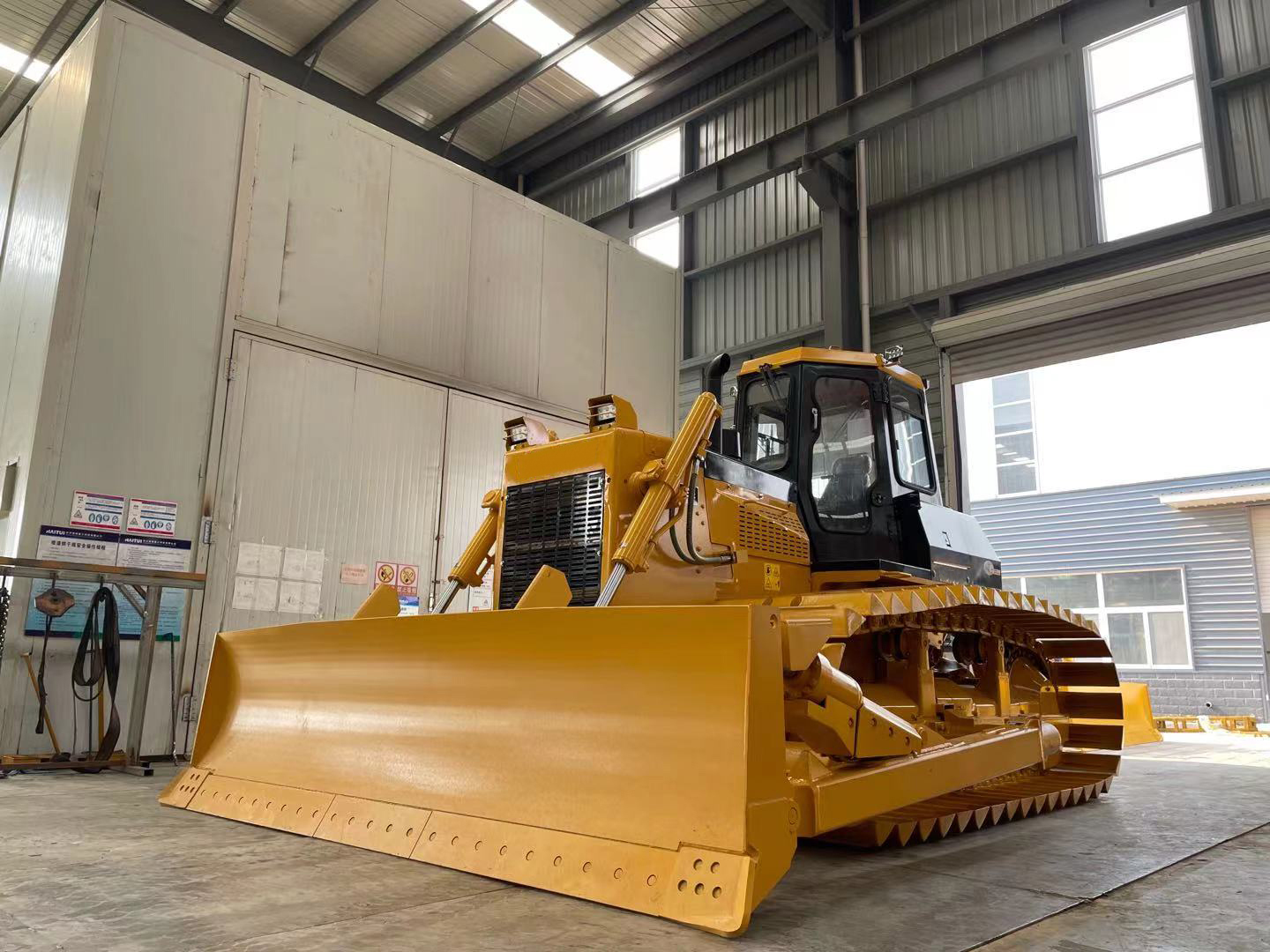
If site conditions fall between two versions—for example, mainly earthmoving but with local soft foundation—the materials themselves cannot provide a compromise solution. The range of soft foundation, working season, and transfer distance must be clarified before confirming the corresponding configuration with the supplier.
Information recommended to prepare before inquiry
According to the material structure of this medium bulldozer, providing the following conditions during inquiry helps narrow the version range:
- Main material type: general earth, bulk material, clay/frozen soil, or wetland soft soil;
- Workload and pushing distance: whether medium-distance continuous dozing is required;
- Site conditions: ground bearing capacity, moisture conditions, slope, whether transfer transportation is needed;
- Shift arrangement and power form: fuel or other power solutions;
- Key configurations: blade form, whether a ripper is needed, track shoe width and ground pressure requirements.
The ripper, drawbar, and other items listed in the materials are whole-machine matching options; whether to include them in the plan must be separately confirmed based on crushing operations and towing needs, and it should not be assumed that all versions can be directly equipped.