






















When purchasing a hydrostatic bulldozer, fuel consumption is often one of the first questions asked. But fuel consumption is the result of the whole machine matching the operating conditions; a single figure alone makes it hard to judge whether a machine suits a given site. The more practical order is: first confirm whether the power form, transmission structure, site load-bearing conditions, push distance and version configuration line up, then discuss fuel performance under comparable conditions.
First distinguish power form from transmission form
Hydrostatic transmission describes the travel transmission method and is not the same as pure electric power. The E22 in this site's catalog is a pure electric bulldozer, a different power route from fuel hydrostatic bulldozers; on-site power supply and recharging conditions must be calculated first. The DH17 associated with this article is a fuel model, equipped with a Weichai WP7 China IV electronically controlled engine and a dual-circuit electric hydrostatic drive system.
These two layers of information must be viewed separately: power comes from a diesel engine, and travel is driven by the hydrostatic system. Therefore, discussing fuel consumption cannot be judged in isolation from engine power modes, load conditions and work organization.

What operating conditions suit hydrostatic transmission
The model information lists a dual-circuit electric hydrostatic drive system with load-adaptive function, supporting stepless speed regulation for load steering and fixed steering, and describes flexible operation in narrow work areas. Supporting information also includes a transfer case design that optimizes the hydraulic system layout. These features correspond more directly to steering control, speed adjustment and on-site operating convenience, rather than a fuel consumption conclusion that can be applied directly.
It should be noted that suitability still depends on specific working conditions. Soil type, moisture content, push distance, slope and operating method all affect actual performance; the information does not provide fuel consumption or efficiency data under these conditions, so it cannot be inferred that any site will achieve the same results.
Basic conditions of a medium full hydraulic bulldozer
The main conditions listed for the DH17-G standard version are as follows, for judging whether it matches the work objectives rather than as a purchasing conclusion:

| Item | Data value |
|---|---|
| Engine | Weichai WP7 China IV |
| Rated power | 152 kW / 1800 rpm (178HP) |
| Operating weight | 17730 kg (with ripper) / 19290 kg (with tiller) |
| Ground pressure | 65 kPa (with ripper) / 77 kPa (with tiller) |
| Ground contact length | 2675 mm |
| Minimum ground clearance | 410 mm |
| Track shoe width | 510 mm standard, also 560 / 610 mm |
| Fuel tank capacity | 352 L |
| Forward/reverse speed | 0–10 km/h |
| Blade type | Straight tilt blade / semi-U blade |
These data help judge whether the overall dimensions, undercarriage specifications and blade configuration match site conditions, but cannot answer fuel consumption on their own. The relationship between fuel tank capacity and continuous operating duration also needs to be verified against actual load, power mode selection and on-site refueling arrangements.
Judge version differences by site and material
The DH17 offers standard, super wetland, coal, sanitation, forest and desert versions. Version names alone do not mean all configurations are interchangeable. Taking the super wetland version as an example, the information lists a track shoe width of 1100 mm (standard), ground contact length of 2935 mm and ground pressure of 30.5 kPa; the sanitation version likewise lists 1100 mm track shoes and 31.5 kPa ground pressure, and is equipped with a sanitation blade. For soft wet sites, load-bearing conditions must first be verified, then whether wide tracks and low ground pressure correspond to on-site needs, rather than selecting directly by version name.
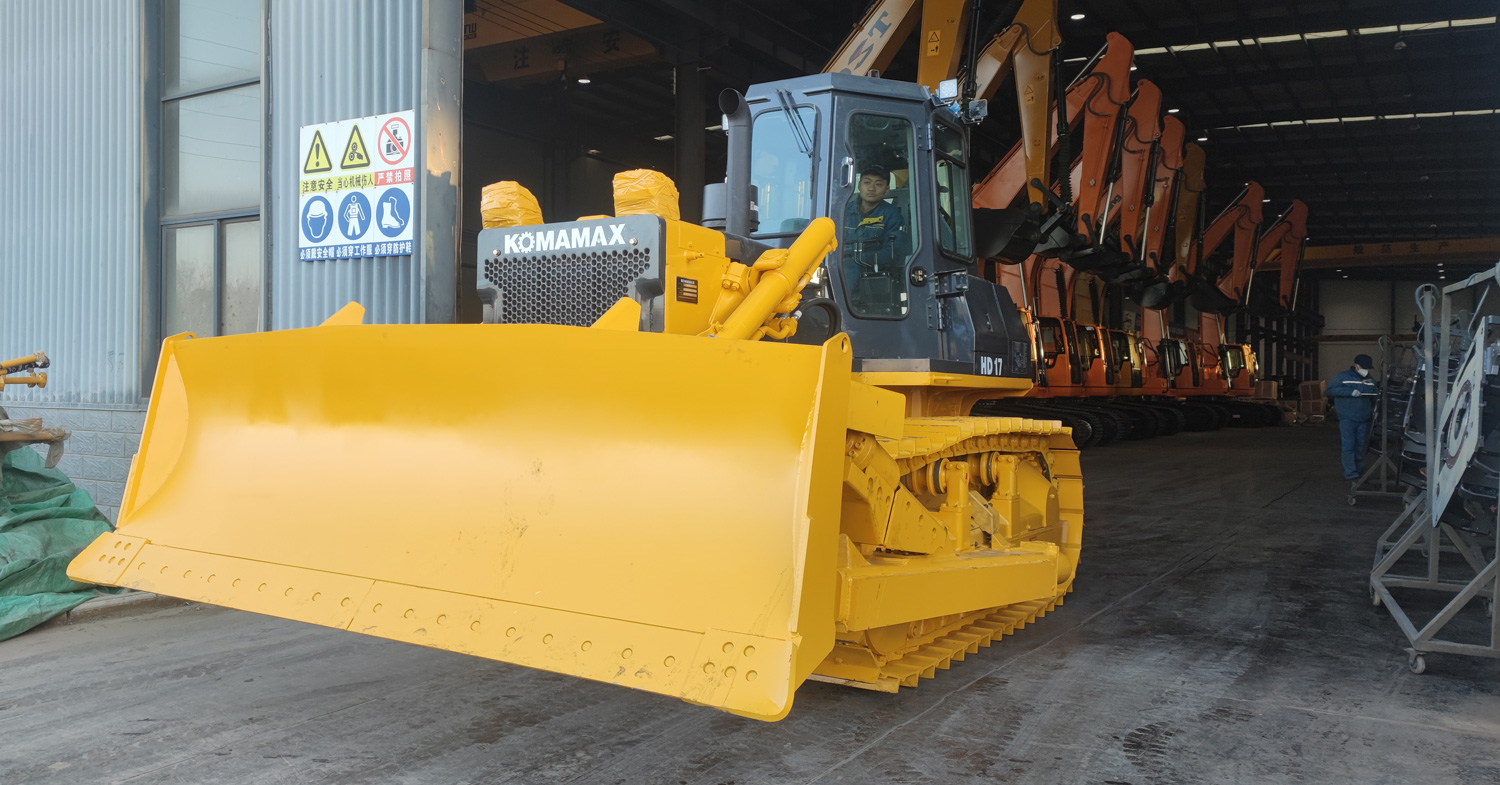
If the work is mainly general earthmoving, construction sites, road building and short-distance material transport, the standard version's straight tilt blade or semi-U blade configuration is closer to the application scope described in the information. For bulk materials, wetlands or special material scenarios, blade form and undercarriage protection configuration need separate verification.
Items still to confirm before purchase
- Actual push distance, material type and site slope; the information does not provide efficiency or fuel consumption commitments under these conditions.
- Basis for selecting power mode; the engine information mentions three power modes, but the specific switching strategy must be confirmed against load and operating habits.
- Continuous work shifts and refueling arrangements; the actual continuous operating duration corresponding to the 352 L tank is affected by load.
- Transport dimensions and site access road restrictions; overall dimensions are 5465 × 3452 × 3154 mm (standard version) and must be checked against the transport plan.
- Whether attachments such as rippers and tillers are included in the plan; different configurations correspond to different operating weights and ground pressures.
When requesting a quote, it is recommended to provide material type, push distance, site load-bearing and slope conditions, planned shifts, power form preference, and blade and track configuration requirements. The application boundaries of hydrostatic transmission are ultimately determined by these conditions together, not by a single fuel consumption figure.