






















When pushing soil on soft ground, backfill or sites with high moisture content during the rainy season, the first problem equipment usually exposes is not insufficient power but track sinking, slipping and steering difficulty. When discussing tracked dozer selection at this time, ground contact configuration deserves attention before horsepower figures. However, "low ground pressure" does not mean "it can travel on any soft ground." Site conditions, overall machine weight, track shoe width and ground contact length must be judged together.
Where the hauling problem on soft wet sites comes from
The bearing capacity of soft ground changes with moisture content. The same site may show completely different trafficability in the dry season and the rainy season. When a dozer works on such ground, traction must be transmitted to the soil through the tracks. If the ground contact area is insufficient or the ground pressure exceeds the surface bearing capacity, the tracks will sink and blade pushing force will be lost accordingly.
Therefore, the core problem to solve for hauling on soft wet sites is this: while meeting hauling efficiency requirements, distribute the overall machine weight to the ground through the tracks as much as possible, and ensure that the tracks are not "sucked in" by mud during steering and reversing. This is a matter of ground contact configuration and cannot be compensated for merely by reducing speed or blade load.
In what order should ground contact configuration be assessed
The ground contact fields that can be read directly from the documentation include operating weight, ground pressure, track shoe width, ground contact length and track ground contact area. The assessment order can be arranged as follows:

- First confirm the actual bearing conditions of the site during the rainy season, including surface soil type, moisture content and whether there is a hard crust layer;
- Then examine the relationship between overall operating weight and ground pressure to judge whether the load per unit area matches site bearing capacity;
- Next check track shoe width and ground contact length to see whether the ground contact area is expanded through these two items;
- Finally confirm track shoe type, grouser height, undercarriage sealing and other configurations related to muddy wet ground; this part often needs to be confirmed separately with the supplier.
The significance of this order is that ground pressure is the result, track shoe width and ground contact length are influencing factors, and site bearing capacity is the constraint. Discussing ground pressure values apart from the site easily turns documentation fields into general conclusions.
Taking the ground contact data of a medium dozer as an example
The SD26 series associated with this site is a 260 hp medium dozer. The ground contact related parameters listed in the documentation are as follows:
| Field | Verified data |
|---|---|
| Operating weight | 23450 kg |
| Ground pressure | 66 kPa |
| Track shoe width | 560 / 610 / 660 mm |
| Ground contact length | 2872 mm |
| Track ground contact area | 28727 cm² |
| Track gauge | 2000 mm |
| Number of track shoes | 38 per side |
Several points related to soft wet sites can be read from this set of data. First, this series offers three track shoe widths; increasing width changes the ground contact area and ground pressure, so the specific width used for quotation and calculation must be clarified at purchase. Second, the ground contact length of 2872 mm and the track ground contact area of 28727 cm² are matched, indicating that the ground contact area is not determined by shoe width alone. Third, the ground pressure of 66 kPa corresponds to the state given in the documentation; the value after switching to wider track shoes cannot be directly inferred, nor can it be used to judge whether a specific site can be passed.

The documentation also mentions that this series includes a wetland version, but the specific undercarriage configuration, track shoe type and protective items of the wetland version are not detailed in the verified parameters. Therefore, if the project mainly involves soft-ground hauling in the rainy season, whether the wetland version is more suitable than the standard version must be judged after obtaining the independent configuration documentation for that version from the supplier; it cannot be inferred from the series name alone.
Which statements cannot be drawn from the existing documentation
Low ground pressure is only one condition for selecting equipment for soft wet sites; it does not mean the machine will not sink on any soft ground. The following conclusions lack a basis and should not be written into procurement judgments:
- The machine's ability to pass a site with a specific moisture content cannot be inferred from 66 kPa;
- The traction improvement after switching to wider shoes cannot be inferred from the track shoe width options;
- The existence of a wetland version in the series does not mean the standard configuration already includes wetland protection;
- Ground pressure cannot be directly linked to fuel consumption or operating efficiency.
These items all need to be confirmed one by one in combination with specific soil type, layer thickness, work shifts and actual configuration.
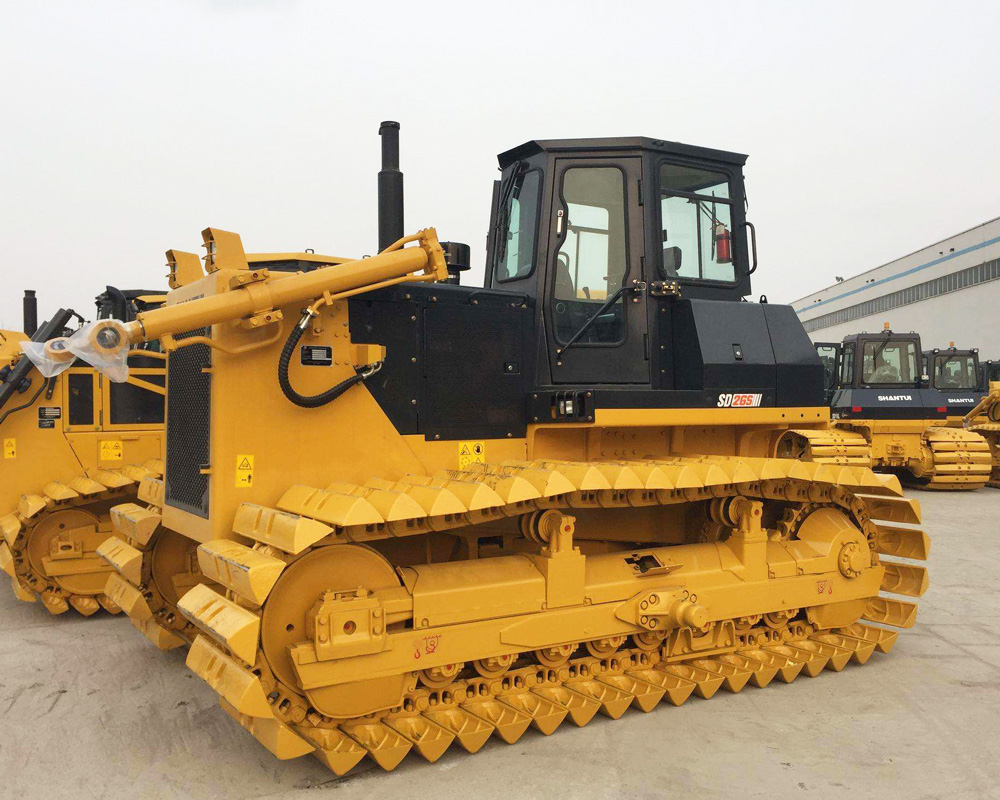
Ground contact and supporting conditions still to be checked before purchase
If the project involves soft-ground hauling in the rainy season, it is recommended to provide the following information to the supplier during inquiry so that they can respond according to the conditions rather than only quoting the overall machine price:
- Site type and surface soil type, range of moisture content variation in the rainy season, and whether there is a hard crust layer or standing water;
- Type of material to be pushed, one-way hauling distance and workload per shift;
- Whether wetland configuration is required, and which track shoe width is used for calculation;
- Blade type; the standard configuration in the documentation is a straight tilt blade with a capacity of 4.6 m³, with angle blade, U-blade and semi-U blade available as options, to be confirmed according to the material;
- Site access routes and transport conditions, and overall transport dimensions and weight limits;
- Power form and emission requirements; the documentation for this series lists the engine as WP12G280E304 with China III emissions, and the emission access requirements of the project location must be confirmed separately;
- Undercarriage inspection and maintenance conditions; the documentation mentions a semi-rigid suspension travel system and automatic track tensioning technology, and the specific inspection items should refer to the accompanying manual.
Ground contact configuration is only part of a soft-ground hauling solution. Putting site bearing capacity, track shoe width, ground contact length and overall machine weight into the same checklist is closer to actual selection needs than comparing a single ground pressure value alone. The wetland configuration and specific site trafficability judgments not covered by the documentation should be listed as matters that must be supplemented and confirmed during the inquiry stage.