






















When a mine stripping face advances, dozers often need to work continuously on gravel, hard soil, and uneven ground. The dozing distance may not be short, and oversized boulders may be present ahead of the blade. The common on-site question is not whether horsepower is sufficient, but whether the undercarriage can absorb repeated impacts, whether the drivetrain can remain stable under prolonged load, and whether structural components can withstand the additional loads caused by rock stripping. This article addresses these constraints, explains the selection approach using public information on a large crawler dozer, and lists the boundary conditions that must be verified before purchase.
Operational Constraints of Advancing a Stripping Face
The main differences between stripping face operations and general site leveling lie in the material and continuity. Stripping material often contains gravel and hard interlayers, so the blade and tracks endure more frequent impacts during dozing. As the working face advances along the ore seam, the equipment may need to maintain loaded operation for extended periods within a shift. The resulting selection questions can be divided into four items:
- Whether the undercarriage can cushion impact loads during travel and dozing, reducing extra wear on the track frame and running gear;
- Whether the drivetrain can deliver smooth output when loads change, avoiding frequent impacts being transmitted to the final drive;
- Whether the main frame and blade structure can meet impact resistance requirements in rock stripping;
- Whether daily inspection points are easy to access and whether maintenance affects continuous operation schedules.
These questions cannot be answered by a single power rating. The following sections compare verified product information item by item according to the requirements.
What Site Problems the Undercarriage and Travel System Address
This large crawler dozer adopts a K-type floating undercarriage and an integral articulated undercarriage design. The information states that this cushions impact loads during travel and operation and improves overall traction performance. For stripping faces with large ground undulations and abundant boulders, the value of the floating undercarriage lies in relieving part of the impact from structural components rather than making the equipment endure it rigidly. The information also mentions that a multi-stage damping assembly is used to counteract vibrations from complex road surfaces, which is directly related to travel stability in mountainous, rocky, and mining area conditions.

For the tracks, this model uses fully sealed and lubricated track chains with an integrated main link design. The information describes them as highly wear-resistant and relatively labor-saving to disassemble, replace, and maintain. It should be noted that track life still depends on material abrasiveness, ground conditions, and operating methods, and replacement intervals cannot be inferred from structural descriptions alone.
Role of the Drivetrain and Hydraulic System Under Continuous Load
This model uses a hydraulic power-shift transmission with a planetary final drive structure. The information states that the system can adjust power output according to changes in external load and has a built-in hydraulic buffer structure to absorb impact loads during power transmission. For dozing on a stripping face, the load changes with material density and blade penetration depth. If the drivetrain lacks buffering, impacts can easily accumulate in the final drive and axle shafts. The information also mentions that the transmission assembly is equipped with multi-plate hydraulic clutches and forced circulation lubrication, and that the final drive uses spiral bevel gears with splash lubrication. These are basic conditions for maintaining prolonged loaded operation.
The working hydraulic cylinders have been optimized, and core seals and high-pressure hoses use imported high-standard components. The externally mounted distributor valve group facilitates inspection, disassembly, and maintenance. For mining sites, if the hydraulic system leaks or the valve group is difficult to access, downtime directly affects stripping progress. Therefore, maintenance accessibility and component reliability are also worth confirming before purchase.
Correspondence Between Structural Components and Safety Configurations
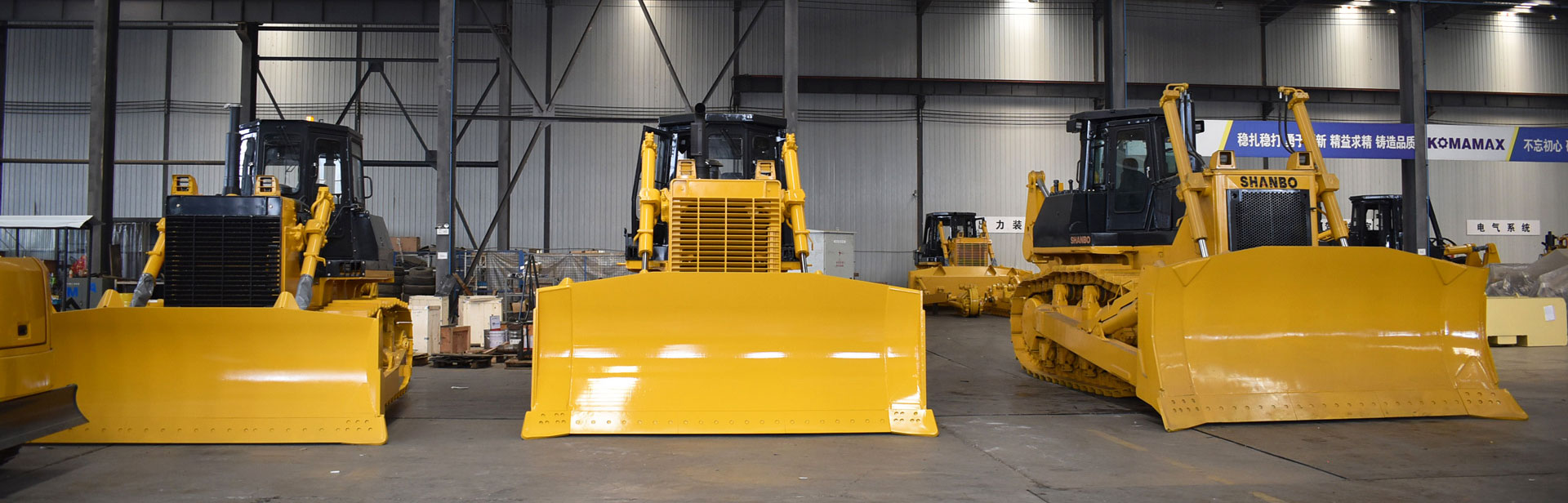
The main frame is a fully enclosed box-type structure made of high-strength wear-resistant steel and heavy-duty cast steel components. The information emphasizes its impact, bending, and torsion resistance for adapting to prolonged high-intensity continuous operation in harsh construction environments. The blade is a standard large-capacity semi-U bulldozer blade with a high-strength box-type skeleton and high-toughness wear-resistant material. The information gives a blade capacity of 16 m³, blade width of 4314 mm, and maximum cutting depth of 700 mm. When dozing loose and blocky materials on a stripping face, whether the semi-U blade matches the application must be judged in conjunction with material particle size and dozing distance, not by capacity alone.

For safety, this model comes standard with a ROPS rollover protection structure and FOPS falling object protection structure, as well as safety warning lights, a reversing voice alarm, and a braking system. The information mentions that an upgraded integrated ROPS&FOPS protective frame is optional. Whether the stripping face has rockfall risks and whether additional protection is needed should be confirmed in accordance with mine slope management requirements.
What Maintenance Conditions Also Matter for Continuous Operation
The maintenance designs related to continuous operation in the information include: a large opening engine hood for daily inspection and troubleshooting, a maintenance-free battery to reduce later maintenance, and maintenance reminder labels at key locations. This model is also equipped with an intelligent monitoring system that can monitor hydraulic oil temperature, oil level, cooling water temperature, and other data and issue over-limit alarms. These functions help operators and maintenance personnel detect abnormalities, but they cannot replace regular inspections and fault diagnosis.
Before purchase, confirm whether the site has the corresponding maintenance space, spare parts supply, and technical support conditions. The information does not provide maintenance intervals or specific disassembly and inspection procedures; actual implementation should be based on the onboard manual and on-site maintenance system.
Boundary Conditions to Verify Before Purchase
This model has an operating weight of 54000 kg, ground pressure of 0.123 MPa, gradeability of 30°, minimum ground clearance of 525 mm, and track gauge of 2260 mm. These values are used to judge the basic match between the equipment and the site, but they cannot directly infer that the same operational performance will be achieved on all stripping faces. It is recommended to verify the following items before inquiry and site entry:
| Verification Item | Content to Clarify |
|---|---|
| Material conditions | Gravel proportion, maximum block size, and hardness in the stripping material; whether a ripper is needed |
| Dozing organization | One-way dozing distance, working face slope, and whether multiple machines are needed |
| Site bearing capacity | Bearing and drainage conditions of the stripping face and haul roads |
| Shift arrangement | Continuous operation duration, refueling, and shift handover methods |
| Transport and site entry | Equipment transport dimensions, road width and height limits, and unloading site |
| Configuration confirmation | Whether blade type, ripper, protective structures, and monitoring configuration match the information |
The power unit mentioned in the information for this model is a diesel engine, model KTA19-C525, with a rated power of 340 kW/600 hp. It is not a pure electric dozer, so site facilities should not be arranged according to the refueling logic of electric equipment during purchase. If the project has emission or low-carbon requirements, local regulations and equipment access conditions should be verified separately.
Overall, the key to selecting equipment for advancing a mine stripping face lies in whether undercarriage cushioning, drivetrain stability, structural impact resistance, and maintenance accessibility correspond to site conditions. The above model information provides verifiable structural descriptions in these respects, but actual applicability still depends on materials, slope, haul distance, and site organization. When making an inquiry, it is recommended to provide the stripping material composition, daily dozing volume, working face slope and length, site bearing capacity, shift arrangement, and transport restrictions so that the supplier can propose a corresponding solution based on the configuration.