






















Before scheduling an electric bulldozer into an earthmoving plan, power supply and charging conditions often determine earlier than the blade and undercarriage whether it can run shift after shift. The machine itself can be selected by specification, but whether the site can supply power, whether the charging interface matches, and how charging between shifts will be arranged all need to be confirmed item by item before delivery. The following uses a 272 hp electric medium bulldozer as an example to explain the categories of conditions to be secured before delivery, and what the available information can and cannot answer.
First clarify how the machine draws power and how it charges
This model is driven by a 200 kW (272 HP) permanent magnet synchronous motor, matched with a 614.2 V, 690 Ah, 423.94 kWh lithium iron phosphate battery pack and equipped with an intelligent BMS management system. On charging, the information lists support for 2×300 kW battery interfaces, 2×250 A DC fast charging, and 2×400 kW DC discharge, plus multiple auxiliary power supplies for battery heating and stable low-voltage circuit operation.
This information indicates that the charging side must be prepared for DC fast charging, not ordinary AC outlets. Before delivery, the output voltage and current capability of the charging equipment should be checked against the interface conditions above; the information does not give the time required to charge from one state of charge to another, nor actual working endurance. These two items cannot be inferred from battery capacity alone and must be confirmed with the supplier.

Pre-delivery preparation checklist
Power capacity and connection conditions
- Confirm whether the DC charging power available on site can cover the requirements of the 2×250 A fast-charging interfaces, and whether the distribution capacity has margin.
- Confirm the specification, number and layout of charging interfaces, corresponding to the machine-side 2×300 kW battery interfaces.
- Confirm the distance from the work face to the charging point, the cable routing path and protection conditions, so that charging facilities do not become a new site obstacle.
Shift and charging arrangements
- Set charging windows according to actual shift length, continuous dozing intensity and breaks between shifts; the information does not give endurance or charging time, so supplier test or calibration data should be used.
- Confirm whether a temporary charging point is needed at the work face, or whether the machine will return to a fixed charging area between shifts.
- In cold or hot seasons, battery heating and the thermal management system will operate, so ambient temperature factors should be included in charging arrangements.
Site and supporting conditions
- Confirm drainage, dust protection and personnel access isolation conditions in the charging area.
- Confirm that auxiliary power can stably supply battery heating and low-voltage circuits.
- Confirm whether a usable 4G network is available on site to support the remote monitoring module; this model is equipped with a 4G remote monitoring TBOX module.
What the thermal management information means for charging arrangements
This model integrates a thermal management system, including an 8 kW compressor TMS cooling system, a 2.5 kW fresh-air cooling system and a 10 kW electronically controlled air conditioner; the liquid cooling system uses a 45 kW plate-fin radiator and a 400 W PWM water pump. The information states that it can operate stably in extremely high and low temperature areas, but does not give the specific applicable temperature range. Therefore, before delivery to a cold or hot site, the ambient temperature range should be treated as an item to be confirmed, and the actual operating conditions for battery heating and cooling should be verified with the supplier rather than scheduling shifts directly on the assumption that it can adapt to extreme temperatures.
Which conditions are not covered by the information and need separate confirmation
The available product information does not give the following, which should be confirmed item by item with the supplier or charging facility provider before delivery:

- Actual working time per shift and the corresponding power consumption;
- The specific time to charge from low state of charge to usable state of charge;
- The specific grid capacity requirements of the charging facilities;
- Usable capacity and power degradation of the battery at extreme temperatures;
- Battery warranty, replacement and recycling arrangements.
These items directly determine whether a shift can be completed and how large the charging facilities need to be; when information is missing, production should not be scheduled on optimistic assumptions.
Applicable scenarios and boundaries
The information positions this model as an electric medium bulldozer for urban municipal construction, environmental protection projects, green mining operations and indoor low-noise demolition projects with strict low-carbon requirements, and mentions suitability for rental business and government-supported green low-carbon construction projects. The common condition behind this positioning is that the work area has relatively stable power access, or allows charging facilities to be set up on site, and that there are clear limits on exhaust emissions and noise.
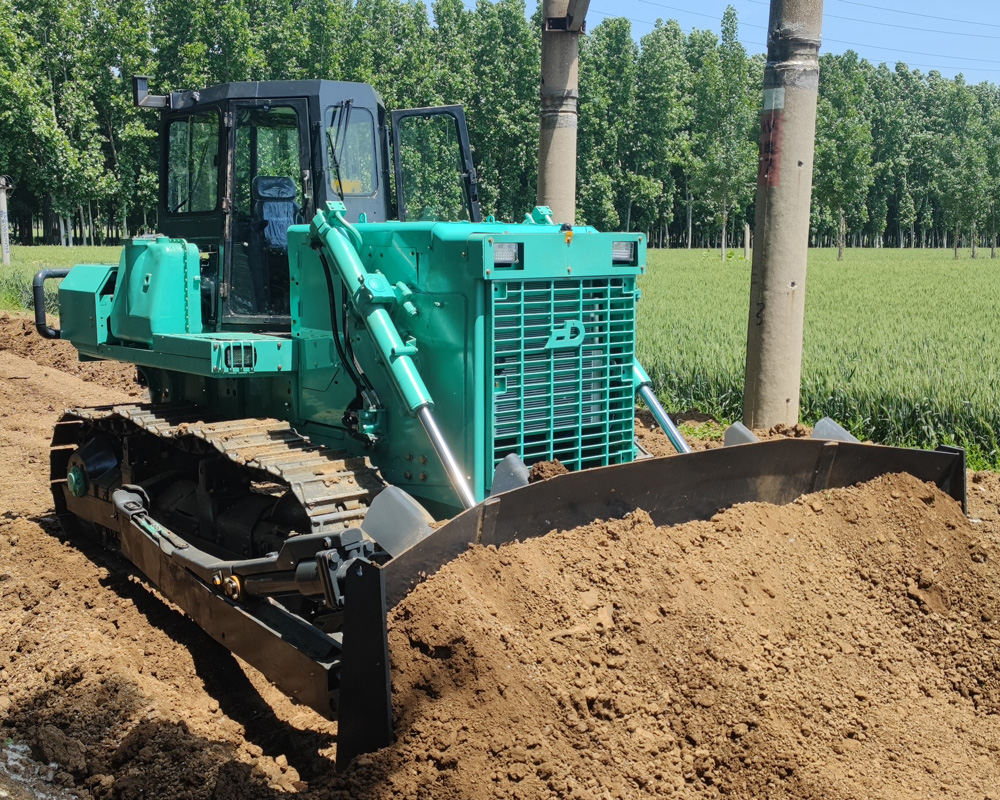
If work faces are scattered and relocations are frequent, or the site cannot guarantee charging access, charging organization will become the main constraint; in that case, the relocation and connection costs of charging facilities should be included in the scheme comparison rather than looking only at the machine itself. If power conditions are not available, whether to switch to another power form is a project-level trade-off that needs separate judgment based on site power and schedule.
Conditions to provide together when requesting a quotation
When requesting a quotation for this model, it is advisable to also state: the material to be worked and dozing distance, average daily workload and shift arrangements, whether the site has DC fast-charging access, the ambient temperature range, whether a temporary charging point is needed, and key configuration requirements such as blade and tracks. Whether the supplier can provide a charging plan and configuration recommendations based on these should also be confirmed during communication.