






















When loading coordination goes wrong, the site often first suspects that the excavator is not large enough. But in actual organization, the same machine model will change its loading rhythm when the stockpile position, material or truck spacing changes. To judge whether a medium crawler excavator is suitable for a certain loading task, the work objective must first be broken down into verifiable site conditions, and then the equipment data fields corresponding to these conditions should be examined.
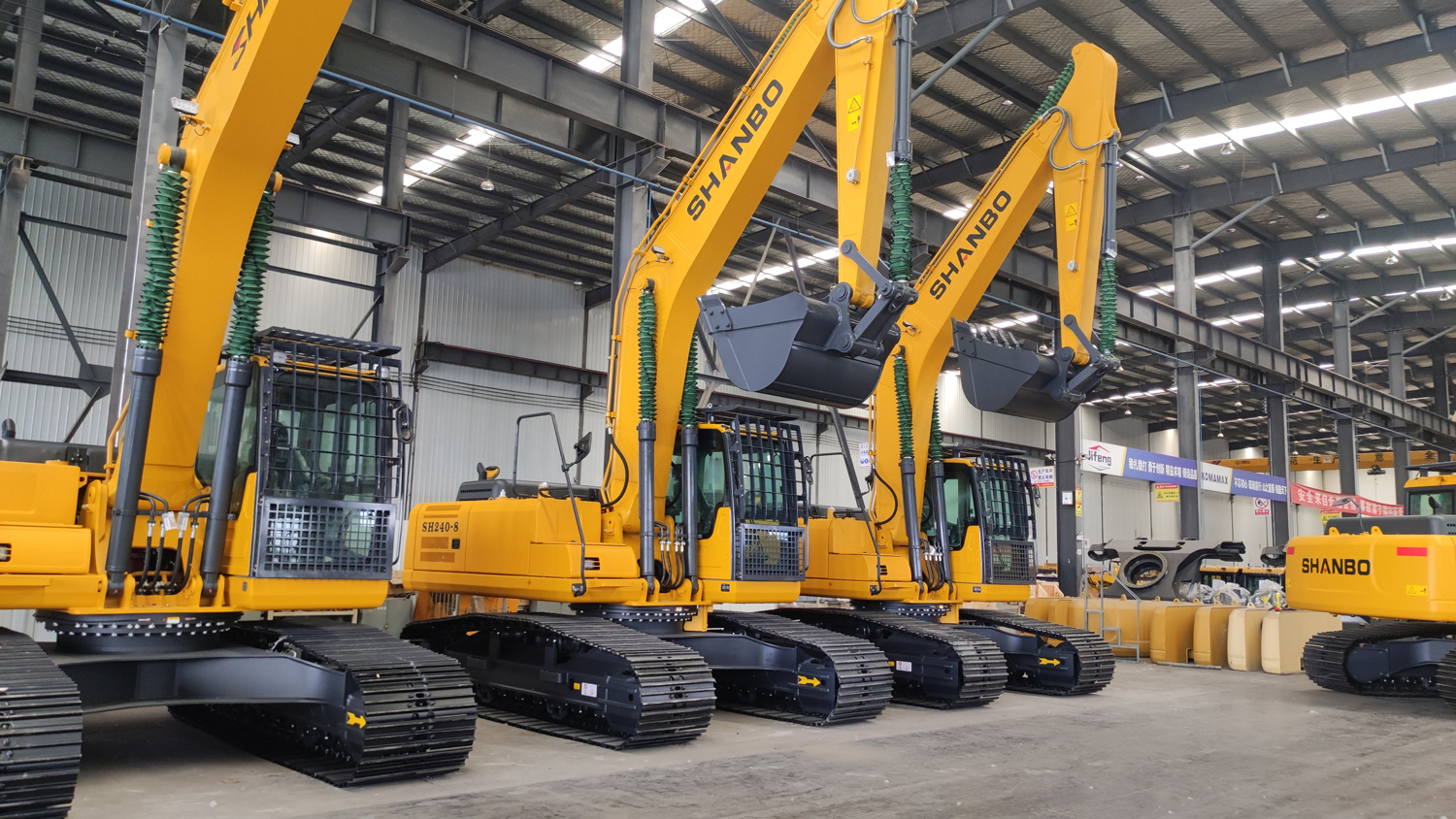
The following uses the verified parameters of a 23.2-tonne-class medium crawler excavator (model SH240-8) as an example to explain the judgment approach for loading coordination. The parameters in this article are only used to explain the basis for selection and do not mean that this model is suitable for any material or site.
The Core Problem to Be Solved in Loading Coordination
The work objective of a loading task can be summarized as: within a unit of time, steadily deliver the material stripped or stockpiled at the working face into transport vehicles, while keeping both vehicle waiting time and excavator idle time as short as possible. This objective is constrained by several types of conditions:
- Material condition: loose soil, hard soil and blocky stone materials have different requirements for digging force and bucket capacity;
- Geometric relationship: the digging point, the dump truck parking position and the swing angle determine the single-cycle time;
- Ground bearing capacity: soft foundations or backfilled areas will affect the standing position and travel of tracked equipment;
- Transport coordination: truck body height, truck spacing and vehicle turnaround will affect whether a larger bucket capacity is needed;
- Shift intensity: the duration of continuous operation determines the load on the hydraulic and cooling systems.
Of these conditions, only some can be read directly from product parameters; the others must be verified on site. The "underlying logic" of loading coordination is to separate these two types of information.
Geometry Comes Before Bucket Capacity: What Swing and Dump Height Correspond To
During loading, the excavator is not at full load on every bucket; much time is consumed by swinging and positioning. The data show that this model has a maximum digging height of 10095 mm, a maximum dump height of 7190 mm, a maximum digging depth of 6490 mm, a maximum horizontal digging reach of 9860 mm, a minimum swing radius of the working equipment of 2970 mm, and a tail swing radius of 2920 mm.

This set of data describes the envelope range of the working equipment and helps determine whether the digging point and the unloading point can fall within the same swing and whether the normal dump truck body height can be covered. It cannot be directly converted into the number of loading buckets per hour, because the actual rhythm is also affected by operator skill, swing angle and vehicle positioning speed. Before purchase, these fields can be used for a preliminary comparison with the site layout drawing, rather than comparing bucket capacity first.
How to Assess the Coordination Between Material and Bucket Capacity
The standard bucket capacity of this model is 1.2 m³, the bucket width is 1254 mm, the bucket digging force is 146 kN, and the stick digging force is 107 kN. For loading, bucket capacity determines the material volume per bucket, and digging force determines whether the bucket can be filled in hard soil or blocky stone material.
The two need to be considered together: if the material is relatively hard, then even if the bucket capacity is larger but the bucket cannot be filled, the actual transported volume per cycle will decrease; if the material is loose and vehicle turnaround is fast, the match between bucket capacity and cycle time becomes more critical. The 146 kN and 107 kN in the data are rated values under a specific working equipment configuration and cannot be used to infer performance under other bucket types or extended-arm configurations; the actual configuration must be confirmed with the supplier.
The Relationship Between Hydraulic Configuration and Combined Operations
This model is equipped with variable displacement piston main pumps, with a maximum working flow of 2×224 L/min, travel circuit pressure of 34.3 MPa, swing circuit pressure of 25.5 MPa, and control circuit pressure of 3.9 MPa. In loading operations, the boom, stick, bucket and swing often require combined movements, and the matching of flow and pressure affects the smoothness of movement coordination. These values can indicate the specification level of the hydraulic system, but loading efficiency still depends on operation and site organization. The data do not provide loading cycle time or shift output, and capacity should not be estimated on this basis.

Ground Bearing Capacity and Standing Position Conditions
Loading working faces often have soft foundations, backfilled areas or muddy ground after rain. This model has an operating weight of 23200 kg, track shoe width of 600 mm, overall track width of 2800 mm, ground pressure of 49.8 kPa, gradeability of 70% (35°), travel speed of 5.1 / 3.1 km/h, and maximum traction force of 214 kN.
The ground pressure value can be used for comparison with site bearing conditions, but it is measured under a specific configuration and will actually vary with bucket load and ground condition. Whether a soft-foundation site needs mats, replacement fill or a changed standing position is a site judgment, and the data cannot provide a conclusion. Gradeability is a rated indicator; passability under full load, wet and slippery conditions or offset load still needs on-site confirmation.
Shift Intensity and Continuous Operation Conditions
Loading is often accompanied by long periods of continuous operation. This model has a fuel tank capacity of 330 L, hydraulic oil tank of 250 L, cooling system capacity of 28 L, engine oil capacity of 23.7 L, and a 6-cylinder turbocharged engine with a displacement of 6.7 L, rated power of 133 kW/2000 rpm, and maximum torque of 708 N·m/1500 rpm.
These fields can help determine the general direction for refueling frequency and heat load management, but the data do not provide actual fuel consumption, the upper limit of continuous operation duration, or derating data under high-temperature environments. If the project involves double shifts or high-temperature working conditions, cooling conditions, refueling organization and maintenance arrangements should be treated as matters to be verified, rather than estimating endurance only from fuel tank capacity.
Checklist for Loading Coordination
Before purchase or deployment, the site conditions can be matched with the data fields according to the following table:
| Site Condition | Corresponding Data Field | Still Needs Confirmation |
|---|---|---|
| Material hardness and lump size | Bucket/stick digging force, bucket capacity | Actual bucket configuration and material testing |
| Layout of digging point and unloading point | Digging height, dump height, digging reach, swing radius | Site layout drawing and vehicle height |
| Ground bearing | Operating weight, ground pressure, track shoe width | Foundation bearing capacity and whether mats are needed |
| Ramps and relocation | Gradeability, travel speed, traction force | Actual slope and road surface condition |
| Shifts and continuous operation | Fuel tank capacity, cooling capacity, rated power | Fuel consumption, cooling and maintenance arrangements |
Application Boundaries and Matters to Confirm Before Purchase
The data for this 23.2-tonne-class medium crawler excavator support its use in heavy construction, earthmoving, quarrying, road and municipal projects, but whether it is suitable for a specific loading task depends on material, truck spacing, site and shifts. The following points are recommended to be raised together during inquiry:
- Working equipment configuration: the actual matching of standard bucket, larger bucket or other attachments; the data only state the standard 1.2 m³ bucket;
- Transport conditions: whether the overall transport dimensions and total length of 9625 mm, total width of 2980 mm and total height of 3075 mm meet access road and trailer restrictions;
- Site conditions: actual passability on soft foundations, slopes or narrow working faces needs on-site verification;
- Shift arrangement: daily operating hours, refueling conditions and maintenance plan;
- Supporting equipment: dump truck body height, truck spacing and turnaround organization, and whether attachments and bucket type need separate confirmation.
When inquiring, providing the material type and condition, expected loading volume, vehicle specifications and truck spacing, site bearing capacity and ramp conditions, shift and power form requirements, as well as key configurations such as bucket and tracks, will help the supplier provide a solution matching the site conditions. The above parameters are as stated in the data; the actual delivery configuration and applicable conditions shall be subject to the final technical documents and on-site verification.