






















In earthwork loading operations, engine power is often treated as the primary basis for judging loading capacity. In reality, engine power determines the upper limit of power supply, while the speed of the loading cycle also depends on hydraulic system flow and pressure, bucket capacity, swing and dumping radius, material looseness, and the pace at which transport vehicles arrive. Treating power configuration and loading capacity as the same issue can easily lead to overlooking the factors that truly affect cycle time during model selection.
What power options correspond to, and what they do not directly correspond to
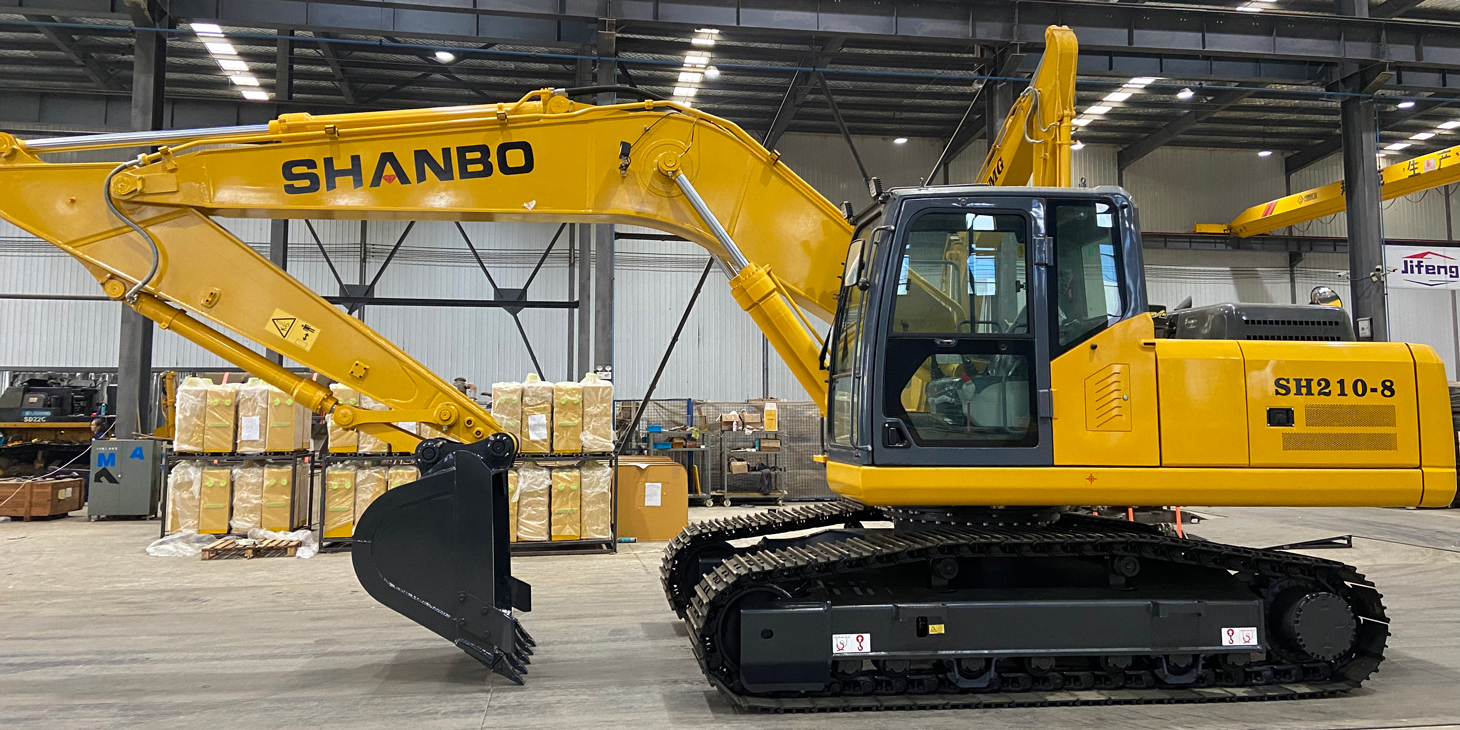
Taking a 21-ton crawler excavator as an example, the data shows two engine configurations of 129 kW and 153 kW, a hydraulic system with 34.3 MPa high-pressure dual pumps, flow of 2×231.7 L/min, bucket capacity of 1.0 m³, maximum digging depth of 6350 mm, maximum digging radius of 9700 mm, and digging force of 126/134 kN. Among these fields, engine power and hydraulic parameters together form the power chain, but the loading cycle also involves swing speed, dumping height, and matching with transport vehicles. The data does not provide specific values for these items, so they should be confirmed separately before purchase.
Differences in engine power should be viewed within hydraulics and the work cycle
A higher-power configuration may have reserve capacity under continuous load conditions, but whether this translates into a faster loading cycle depends on whether the hydraulic pump can effectively distribute power to travel, swing, and digging actions. The data on this site does not provide a comparison of cycle times between the two power configurations, so it cannot be directly asserted that the higher-power version loads faster. A reasonable approach is to understand the power option as power reserve, and then determine which level is needed based on the specific material and loading height.

Hydraulic parameters explain the capacity to supply actions
The 34.3 MPa system pressure and dual-pump flow indicate that the hydraulic system has a certain capacity to supply actions, but the pressure and flow values themselves do not equal loading efficiency. Loading frequently uses swing and boom lifting, and the hydraulic system's distribution method, heat dissipation conditions, and oil temperature management all affect continuous operation performance. These fall under operating conditions and need to be verified during trial operation or on-site evaluation; conclusions cannot be drawn solely from the values on the data sheet.
What on-site conditions should loading capacity be broken down into
- Material type: Loose earth, compacted clay, or earth containing rock have different effects on cutting resistance and fill factor. The data does not specify the applicable material range.
- Transport vehicle matching: The 1.0 m³ bucket capacity, together with the dump truck bed height and parking position, determines the dumping angle and waiting time. If the vehicle capacity is too large or it is parked too far away, the cycle will be lengthened.
- Working face layout: The maximum digging radius of 9700 mm and maximum digging depth of 6350 mm give geometric boundaries. During actual loading, a margin should be left for the horizontal distance between the digging point and the dumping point.
- Site travel: The data lists a travel speed of 28–35 km/h and gradeability of ≥70%. These are reference values for relocation and slope travel, and do not represent working capacity under full-load loading conditions.
If any of the above conditions does not match, the advantages of the power configuration will be offset. Therefore, during model selection, the loading cycle should first be broken down, and then the bottleneck should be identified.
Where a 21-ton crawler excavator fits
According to the data, this model is positioned for earthwork and infrastructure construction, with a bucket capacity of 1.0 m³ and digging force of 126/134 kN, making it suitable for medium-scale earthwork excavation and loading coordination. If the transport vehicle capacity matches the bucket capacity and the working face distance is within the maximum digging radius, the power and hydraulic configuration can support a conventional loading cycle. However, the data does not provide shift output, loading cycles per unit time, or efficiency data for specific materials, so construction periods or costs cannot be estimated from it.

Another distinction that needs to be made is between “loading capacity” and “excavation capacity.” The digging force of 126/134 kN corresponds to the cutting and digging stage, while the loading stage relies more on swing and dumping. Both use the same hydraulic system, but their load characteristics differ. Directly using the digging force value as the basis for loading capacity is a common misunderstanding.
Items to confirm before purchase
| Check item | Content to confirm |
|---|---|
| Power configuration | How the 129 kW and 153 kW levels correspond to actual materials and shift intensity; the data does not provide differences in fuel consumption or emissions. |
| Working equipment | Whether the 1.0 m³ bucket matches the planned loading material and vehicles; whether other bucket types are needed, which are not listed in the data. |
| Hydraulics and transmission | Oil temperature and heat dissipation conditions of the dual-pump system under continuous loading; the data does not provide relevant test data. |
| Transport and site access | Overall transport dimensions, weight, and on-site road load-bearing conditions; the data does not provide transport outline dimensions and further verification is required. |
| Site conditions | Whether the working face slope, ground bearing capacity, and swing space are sufficient; gradeability ≥70% is a value marked in the data, and actual slope operation must be judged in combination with load. |
After checking power and loading separately
Power configuration answers “whether the machine has sufficient power reserve,” while loading capacity answers “how long one cycle takes under specific material, vehicle, and site organization.” The former can be read from the engine power and hydraulic parameters in the data, while the latter must be confirmed item by item based on on-site conditions. For a 21-ton crawler excavator, the 1.0 m³ bucket, 126/134 kN digging force, and 6.35 m maximum digging depth form the basic working framework, but whether the loading stage runs smoothly still depends on transport vehicle matching, working face layout, and hydraulic performance under continuous operation.
When requesting a quotation, it is recommended to provide: the main material type and looseness factor, the capacity and parking method of the transport vehicles planned for loading, average daily workload and shift arrangements, working face slope and ground bearing conditions, access roads and transport restrictions, and whether a specific bucket or other working equipment is required. Once the above conditions are clear, checking whether the power option and hydraulic configuration correspond will be closer to actual model selection needs than looking at power figures alone.
Product page: 21-ton crawler excavator